涓枃绠€浣?/a>銆€|銆€


| Passing through Gong Yuan - the royal courtyard | |||
http://english.dbw.cn銆€銆€
2010-08-11 14:43:59
|
|||
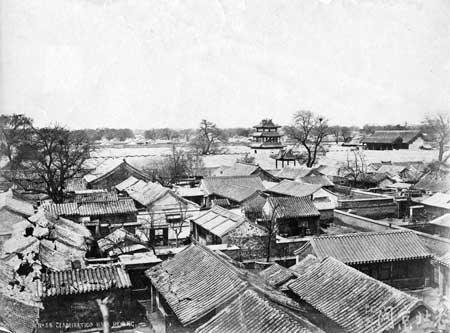
Exam results have always been the defining difference between success and failure for many in China. This was as true of the old days as it is today; the Ke Ju exam had been as crucial since the Sui Dynasty (581-618) as the modern-day gaokao in securing a better life for anyone born into poverty: A high score could lead to high officialdom and a secure future. With Jianguomennei Dajie to the north and east the East Second Ring Road, you'll find a group of hutong sharing the same name - Gong Yuan, literally royal courtyard, but in fact meaning examination compound (another Gong Yuan Hutong is located in Tongzhou district, its fate alas no luckier than its brothers downtown). The lanes are distinguishable by name, though; for example, Gong Yuan Toutiao or Gong Yuan West Lane. This examination compound in Jianguomen was originally established in 1415 by Emperor Zhu Di, eager to draw in nationwide talents after seizing power from his nephew, the Emperor Zhu Yunwen. Located close to the city walls, examinees could get in and out of the city easily, but inside the compound they would find 9,000 examination rooms so small there were just two planks for use as table and chair. During feudal days, temples were often used to seat examinees when the lanes were packed with participants. Worse, since the exams often took days, those rooms also served as the participants' toilet, kitchen and bedroom. A brazier for cooking and lighting often led to fires, with examinees burning to death in their locked rooms. In 1463, for example, a severe fire during an ongoing examination left around 90 participants dead. After the Eight-Nation Alliance burned it down in 1900, the warlord Zhang Zuolin disassembled the remains during the Republic of China and sold them off by auction. Sadly, the local residents today have little idea about this past, although some did confirm the examination compound's existence. Seventy-year-old Chen, who moved in Gong Yuan Toutiao in 1958 said most of the red brick one-story houses were newly built in 1976. "Only the houses with gray bricks were established before I arrived and there are few of those," he said. Chen revealed that last year a fire broke out, damaging what old houses remained. |
|||
| Author锛? Yin Yeping 銆€銆€銆€Source锛? Global Times 銆€銆€銆€ Editor锛? Wu Qiong | |||