涓枃绠€浣?/a>銆€|銆€


| China鈥檚 Lost Treasures | |||||
http://english.dbw.cn銆€銆€
2009-05-21 10:55:34
|
|||||
|
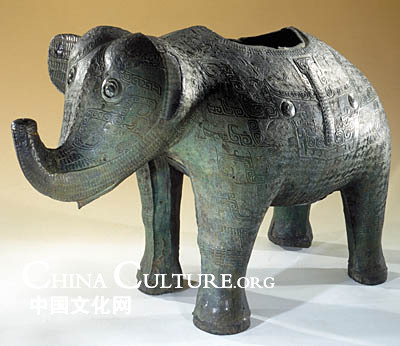
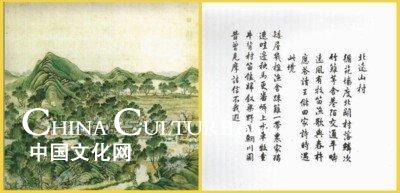
China鈥檚 Lost Treasures in France France, is next in line to the U.K. in terms of holding Chinese relics. The Louvre Museum has more than 30,000 relics, most of which are primitive colored pottery, bronze wares and porcelains of Shang and Zhou Dynasties (About 1600-221BC). The French National Library has more than 10000 pieces from Dunhuang in collection including the silk scrolls of Northern Wei Dynasty (386-534), the golden book of Tang Dynasty (618-907), the Ming Dynasty block-printed edition, the map of Qing Dynasty and the painting of 40 sceneries in Yuanmingyuan. Amid them three kinds of rubbings made in Tang Dynasty are the only existing copies of the paintings and calligraphies of Dunhuang. Elephant-Shaped Zun Collected by the French Guimet Museum
The bronze ware elephant-shaped zun is one of the collections rarest pieces. Generally, the zun is a drinking vessel, which is usually used for royal sacrifices and is made of various shapes to showcase royalty and luxury. The inside of this elephant-figured Zun is empty, which can be used for serving wine and there is a square hole on the elephant鈥檚 back for pouring in the wine. On the elephant鈥檚 belly is the bass-relief of a Taotie, a ferocious mythical combination of a cow, tiger and sheep. Patterns on the elephant鈥檚 ears, nose, legs and bottom are used to emphasize the three-dimensional effect of the animal, which is a distinctive feature of the artworks of Hunan province. The painting of 40 sceneries in Yuanmingyuan Collected by the French National Library in Paris
The painting of 40 sceneries in Yuanmingyuan is thought to be the most authoritative picture album to integrally show the sight of Yuanmingyuan. Ordered by the Emperor Qianlong, the royal painters Shen Yuan and Tang Daiyi drew this painting in 1736. At that time, there were more than 100 scenic spots in Yuangmingyuan, Changchunyuang and Yichunyuan, among which the painters chose the most attractive sceneries to portray, aimed at showcasing the features of the architectures and gardens of Qing Dynasty. It took 11 years to finish this painting, which provides precious information for us to learn the history, politics and culture of that time. |
|||||
| Author锛? Feng Hui 銆€銆€銆€Source锛? chinaculture.org 銆€銆€銆€ Editor锛? Wu Qiong | |||||