涓枃绠€浣?/a>銆€|銆€


| China's Film Industry in Retrospective | |
http://english.dbw.cn銆€銆€
2008-12-16 09:16:06
|
|
|
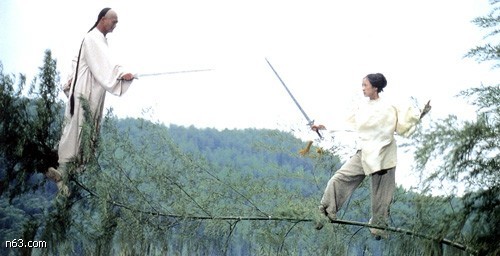
When China was accepted as a member of the World Trade Organization in 2001, the country capped the number of annual imported movies at 20, double the previous amount. For all the concern that was expressed at the time about its impact on the domestic industry, the decision caused no damage at all to the Chinese movie business. Inspired by the enormous success achieved in the west by Ang Lee's Crouching Tiger, Hidden Dragon, Chinese film makers decided to bet on big budget and star-studded martial arts productions. It was therefore no surprise to see the US$31 million Hero, directed by Zhang Yimou and starring Jet Li, Tony Leung, Maggie Cheung and Zhang Ziyi, cause so much excitement in 2002 with its record production budget and record box office receipts (250 million yuan) on the Chinese mainland. The movie was a true commercial success in every sense from production to marketing, and it marked a turning point for the Chinese movie industry. The days of gloom were over; with the general public's interest reawakened, the Chinese movie business started to boom. To date Mr. Zhang has dedicated his efforts to multimillion-dollar blockbusters like House of Flying Daggers (2004) and Curse of Golden Flowers (2006), leading other directors to follow suit. Farewell, My Concubine director Chen Kaige unveiled his US$35 million-plus fantasy The Promise in 2005, a film that was highly-successful at the box office, although at the same time it almost put an end to the director's career. Even Feng Xiaogang, a director better-known for his hilarious comedies, has thrown his cap in the ring of the martial arts movie, and his The Banquet, set in ancient China but adapted from William Shakespeare's Hamlet, graced the silver screen in 2006. |
|
| Author锛? 銆€銆€銆€Source锛? china.org.cn 銆€銆€銆€ Editor锛? Wu Qiong | |