涓枃绠€浣?/a>銆€|銆€


| Shahe fen | |||||||||||||||||||||||||||||
http://english.dbw.cn銆€銆€
2009-12-30 11:18:24
|
|||||||||||||||||||||||||||||
|
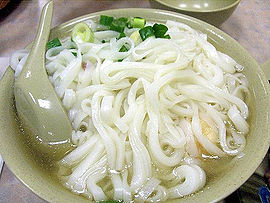
Shahe fen or he fen is a type of wide Chinese noodle made from rice. While shahe fen and he fen are transliterations based on Standard Mandarin, there are numerous other transliterations based on Cantonese Chinese, which include ho fen, hofen, ho-fen, ho fun, ho-fun, hofoen (a Dutch transliteration in Suriname), hor fun, hor fen, sar hor fun, etc. In addition, shahe fen is often synonymously called kway teow (绮挎), literally "ricecake strips", transliteration based on Min Nan Chinese, POJ: k贸e-ti芒u) or guotiao (pinyin: gu菕ti谩o; the corresponding transliteration based on Standard Mandarin), as in the name of a dish called char kway teow. However, shahe fen and kway teow are strictly and technically not the same (the latter being essentially ricecakes sliced into strips) and the Min Nans in general still consciously make a distinction between shahe fen and kway teow in their speech. Original ricecakes or its strips are very stiff in texture (even after cooking), making them unpopular with modern consumers. These noodles are called sen yai (Thai: 喙€喔箟喔權箖喔笉喙? meaning "large rice noodles") in Thailand, and kwetiau in Indonesia.
|
|||||||||||||||||||||||||||||
| Author锛? 銆€銆€銆€Source锛? wikipedia 銆€銆€銆€ Editor锛? Yang Fan | |||||||||||||||||||||||||||||