涓枃绠€浣?/a>銆€|銆€


| 鈥淲alking into Heilongjiang鈥?series of Heilongjiang Sino-foreign cultural exchanges in history | |
http://english.dbw.cn銆€銆€
2010-12-13 10:18:36
|
|
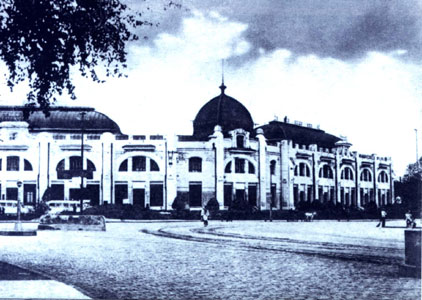 鈥?/span>Jewish Culture鈥?refers to culture created by the Jewish migrations into Harbin in the 1900s including artists, music theorists, art educationists, writers and journals and magazines, libraries, theatres, Lotus Art School, sporting associations and Jewish community culture.
鈥?/span>Korean-Japanese Culture鈥?refers to culture introduced by Korean and Japanese immigrants from the late Qing Dynasty mixing with Chinese native culture. Just like Chinese people, the Koreans, under the oppression of Japanese imperialism, the culture of which embodies the awareness of resistance, such as independent culture and anti-Japan culture.
鈥?/span>Religion culture鈥?like popular film culture, widely distributed in Heilongjiang, and is featured by local color. Religious buildings such as churches and temples are public places for religious activities. Take Harbin as an example. According to the statistics in 1939, there are 84 religious places including 15 for Buddhism, 4 for Islamism, 3 for Catholicism, 28 for Christians, 21 for the Orthodox Eastern Church, 10 for Taoism and 3 for Judaism. After over 50 years of historical change and natural weathering, most religious buildings have gone with the leave of large numbers of overseas, which makes the remaining ones more precious and a historical witness to the boom of Heilongjiang religious culture. |
|
| Author锛? 銆€銆€銆€Source锛? dbw.cn 銆€銆€銆€ Editor锛? Yang Fan | |


| 鈥淓nter Heilongjiang鈥?Series: Origin of nation, history and culture | |
| Heilongjiang鈥檚 furniture export covers five continents | |
| Cool and exciting Heilongjiang International Ski Festival will open in December | |
| Heilongjiang enters ice and snow tour season and the hotels have risen in price | |
| Heilongjiang鈥檚 first 鈥榰nder the shaft鈥?mobile escape capsule passed the experiment stage with real character |