涓枃绠€浣?/a>銆€|銆€



| 鈥淓nter Heilongjiang鈥?Series: Origin of nation, history and culture | |
http://english.dbw.cn銆€銆€
2010-12-01 10:25:33
|
|
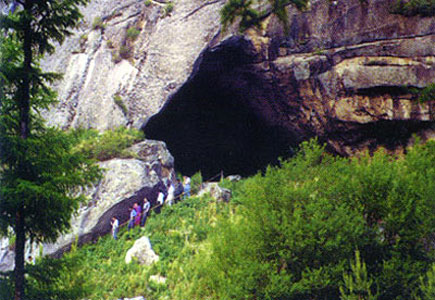 Around more than 4000 years ago, minorities in Greater Higgnan Mountains and Heilongjiang valley transited from matriarchal society to patriarchal society. Early agricultural industry, animal husbandry, fishing and hunting and private property appeared at this time. Three nations: Tongus in the west, Huomo in the middle and Sushen in the east were formed. In 1857, Marx said, 鈥渢he place on the two sides of Heilongjiang River鈥?was 鈥渉ometown of the nation who rules China now鈥? In history, Heilongjiang Province nurtured 5 minorities who entered and hosted Central Plains and regimes. Descendents of Tongus living in Heilongjiang Region are Xianbei, Qidan, Mogolia; Sushen is the offspring of Jurchen, Manchu whoever entered and hosted Central Plains and built the Northern Wei Dynasty, Liao, Jin, Yuan and Qing. Ancient northern minorities鈥?culture are represented by Xianbei Culture, Bohai Culture, Jinyuan Culture and Manchu Culture originates and forms in Heilongjiang Valley. Northern Wei Dynasty was founded by Tuoboxianbei, offspring of Donghu and used to live in Erguna River and northern Greater Khingan Range in 386 AD. Tuoboxianbei unified the north of China, broke the pattern of Han Nation unified China and established the foundation for the appearance and formation of the Chinese nation鈥檚 variety. The foundation of Northern Wei Dynasty accelerated the feudalism course of northern China and promoted fusion of Xianbei and the Han Nation. At this southern and northern culture鈥檚 collision and fusion, it appeared a prosperous period of Tang Dynasty and pushed forward development of the feudalist society of China. A summit of Chinese grotto culture also appeared in Northern Wei. Yugang Grottoes Datong, Longmen Grottoes Luoyang, Mogao Caves with Northern Wei style and Aersai Grottoes are still sparkling. Gaxiandong鈥檚 congratulatory message of Greater Khingan Range is the earliest Moya Caves ever discovered in the most northern China and displays powerful and munificent calligraphic style in an early stage of Northern Wei. |
|
| Author锛? 銆€銆€銆€Source锛? dbw.cn 銆€銆€銆€ Editor锛? Wu Qiong | |