涓枃绠€浣?/a>銆€|銆€



| Seal of friendship: Dongsiwutiao Hutong | |||
http://english.dbw.cn銆€銆€
2010-11-17 11:09:00
|
|||
|
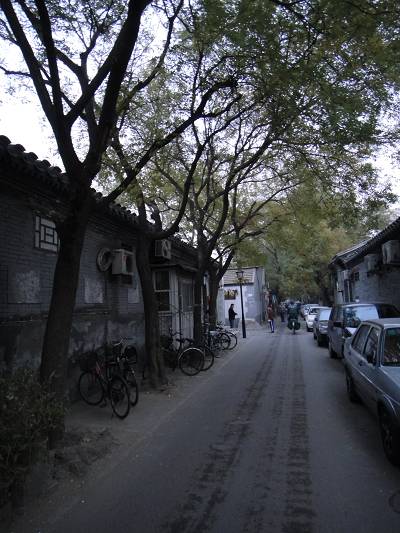
The lanes around Dongsi Hutong never lack stories to tell. Whether it is a former prince (see A Prince Among Lanes: Dongsishisitiao Hutong, July 13 2010) to high officials in the PRC, the streets themselves are dusty yet lively archives of history that are always ready to reveal their secrets. Of these lanes, Dongsiwutiao was once the residence of Yu Qian, governor of Jiangsu Province in 1839. During this period, he was considered one of the few honest o篓 cials. When the spread of opium became the most severe issue of the time, he strictly implemented his duty to stop its sale. Yet what happened later was out of his hands. In 1840, the Opium War erupted. Despite a heroic defensive movement, Yu inevitably failed to defeat the British Army and committed suicide just a year later, the highest-ranking casualty of war. Du Yuming, a famous general of the Republic of China during WWII, also inhabited No. 6 in this lane. Unfortunately, because they've never been maintained as historical buildings, these two places have been ravaged by time, like many other cultural relics in the city after 1949. "This is an ordinary lane with ordinary residents," Ma, a 60-yearold resident, told me. "Nothing particular to explore." Ma is dead wrong. No. 55, in the middle of the lane, is particularly attractive for its bright, newly painted walls. Peeking through its locked red door, I found an elegant garden with a pavilion inside a huge courtyard. Although there is a note indicating it's a cultural relic, local residents clarifi ed that it is now a private siheyuan that was purchased and renovated a few years ago by a government official. Apart from this beautiful doorway, something else captured my attention. On the west side of the lane, it was an entrance tattooed with exclusive calligraphies. In contrast to the red door, these white painted characters were quite dazzling, stimulating the curious passer-by to pop in for a look. Inside, I found 40-year-old Sun Dongyao, the painter of the eyecatching words on the door. As a person born into a seal-making family, Sun has been passionate about carving since he was a child, when he used to turn fi rewood into small models of spears and pistols. Unfortunately, he picked up dysentery and the medicine he took badly affected his mind. In spite of this, he has still worked on his seal-making, which he blessfully considers peaceful work. Guo Shurong, Sun's 70-year-old mother, said that he was always willing to carve for visitors free of charge. Yet my curiosity still lay with the peculiar "tattoo" on the door. "As more people came to visit, I decided to put a note out for them to identify easily," Sun explained, "but since the note was often stolen, I decided to paint the door instead!" Sun and his family have lived here since the 1940s, longer than many old residents in the lane. They are still squeezed into two 12 squaremeter rooms, eking out their lives on a small social security pension. Sun's little room is by no means isolated. Among the old photos in his room, I noticed two Westerners repeatedly. Sun's mother told me they are a couple from Germany who they have known for decades. "They come to visit us twice a year and I think they are about to come again soon," she said. The couple's photos were taken under the city wall before its demolition or in front of this door with Sun's whole family as witness to their friendship. After the tour, I could not help but feel moved by the historical changes in this lane. |
|||
| Author锛? Yin Yeping 銆€銆€銆€Source锛? Global Times 銆€銆€銆€ Editor锛? Wu Qiong | |||