涓枃绠€浣?/a>銆€|銆€


| History lane: Houyuanensi Hutong gives a view to the past | |||
http://english.dbw.cn銆€銆€
2010-10-28 10:31:59
|
|||
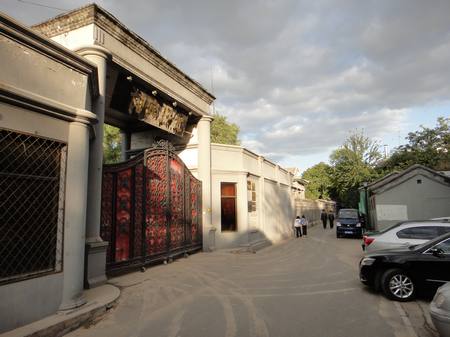
Houyuanensi Hutong is located on the east side of Nanluoguxiang, and while it does not have that trendy neighborhood's fans, it has many notable historical sites that should be pleasing to followers of hutong culture. Houyuanensi Hutong was named after a temple called Yuan En that was built around 1286. Yuan En was still standing almost 600 years later when it was renovated in 1883, but - like many other hutong temples - it vanished without a trace sometime after 1949. One of the most significant tourist spots in the area is No. 13, the residence of renowned writer Mao Dun from 1974 to 1981. A committed but secret member of the Communist Party from as far back as 1921, Mao kept that part of his allegiance a secret so he could continue to work and write against the leadership of the Republic of China (1912-1949). Mao worked closely with the premier Zhou Enlai and was later appointed the first Minister of Culture. When he died in 1981, Mao's last wish was that he be identified in public as one of the earliest members of the Communist Party. Mao's home at No. 13 is a two-courtyard siheyuan that covers 500 square meters. His son, Wei Tao, lived in the front yard, and Mao lived in the rear yard. After his death, the place was kept largely as he'd left it and designated a museum for patriotic education. Even today it is an ideal place to find out about the lifestyle of a star writer and Party member in the 1970s. Exhibits on display include the pens he used for writing, hand-written drafts, and even an old-style refrigerator that his wife bought from a secondhand market in 1949 that still worked two decades later. The main rooms of the backyard are just as they were when Mao lived there, even to the clothes hanging on his hangers, and a small container of his wife's ashes that he kept in his room. |
|||
| Author锛? 銆€銆€銆€Source锛? Global Times 銆€銆€銆€ Editor锛? Wu Qiong | |||