 涓枃绠€浣?/a>銆€|銆€


| 70 years on, 鈥楪one With the Wind鈥?still holds up | |
http://english.dbw.cn銆€銆€
2009-12-16 11:17:37
|
|
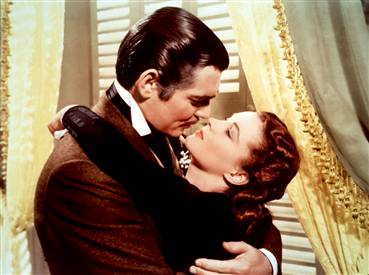
Before attacking the film version of 鈥淕one with the Wind鈥?for its racial and gender politics, it bears noting that almost as much time has lapsed between today and the film鈥檚 original release as had lapsed between that original release and the end of the Civil War. And it can be argued that American society underwent greater changes between 1939 and 2009 than it did between 1865 and 1939.
All of which is to say, if you can cut 鈥淕WTW鈥?some slack for not being as enlightened as we are today, the movie remains one of the greatest products of the Hollywood studio system. In a year that remains the high-water mark for mainstream American filmmaking, the saga of Scarlett O鈥橦ara stands atop a very high mountain. To mark the occasion of the 70th anniversary of 鈥淕WTW,鈥?I watched the film again for the first time in years and was struck by its excellence in everything from the writing to the performances to the technical craftsmanship. When you stop to realize that feature films had sound for only about a dozen years up to that point 鈥?and color for even less 鈥?the achievements of producer David O. Selznick and his extraordinary team of artists become even more impressive. Let鈥檚 start with the performances, though 鈥?the role of Rhett Butler was all but written for Clark Gable, and he delivers some of the finest acting of his career. We see the cynicism as well as the fragile heart that cynicism protects, and we believe him as a badass and as a lover, as a rogue and as a gentleman. Black women in film Halle Berry breaks down barriers, Wanda Sykes makes us laugh and Rosario Dawson proves she can take on any role. more photos Matching him every step of the way is Vivien Leigh鈥檚 Scarlett. In her mid-20s during production, Leigh convincingly ages the character from flirty teen debutante to cold-hearted businesswoman. Just before intermission, when she vows to 鈥渓ie, steal, cheat or kill鈥?to survive in the post-war South, we鈥檙e convinced she means it. (And, as the second half of the film reveals, she certainly does.) Scarlett O鈥橦ara and Melanie Wilkes 鈥?the latter saved from being a two-dimensional goody-goody thanks to Olivia de Havilland鈥檚 empathetic acting 鈥?are the original steel magnolias. The casting remains effective all the way down the line 鈥?director Victor Fleming (with help from his predecessors George Cukor and Sam Wood) fills the movie with performers distinctive enough to make an impact with just a few moments on screen. From the holier-than-thou sneer of Alicia Rhett鈥檚 India Wilkes to Ona Munson鈥檚 hard-bitten kindness as the notorious madam Belle Watling, the characters of 鈥淕WTW鈥?stay in the memory even if they鈥檙e in the movie for less than a few minutes. |
|
| Author锛? 銆€銆€銆€Source锛? msnbc.com 銆€銆€銆€ Editor锛? Wu Qiong | |


