涓枃绠€浣?/a>銆€|銆€


| Hui Culture and Booming Countryside Tourism in Hongcun | |
http://english.dbw.cn銆€銆€
2009-08-03 13:40:47
|
|
|
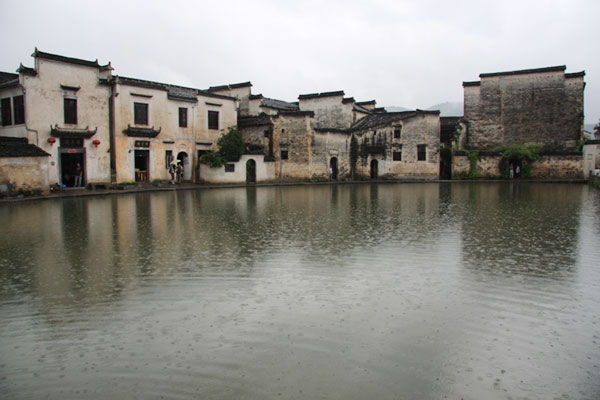
The first glimpse of Hongcun, July 28th, 2009. [Photo: CRIENGLISH.com] Community Convention and Agreements Much has been said about this unique village since the late 1990s, especially after it became a UNESCO world heritage site in 2000. However, the story never ends in this living ancient village. With a population of 1,000 people from about 300 households, 70 percent of villagers in Hongcun work in the tourism industry. Farmers-turned-businessmen sell a wide variety of specialties ranging from guidebooks to local pancakes with special flavors, tea, colorful clothing and its famous bamboo carvings. And many have even opened their doors to provide accommodation for visitors. Jushan Hall, about 150 years old, was said to be the first old home that was converted into an inn inside the scenic spot. Located deep in a narrow alleyway along the village's winding water canals, the hall has made a name for itself as a rustic but comfy place to stay. And wouldn't it be nice to live one's real life in an ancient building like this, that features stunning wooden sculptures carved into the windows and furniture? It was late at night, but customers still called in to book rooms. Hospitable host Yu Fulai answered the phone himself. He only needs to hire extra hands for the peak season and most of the time the household runs the inn on its own. "Our hotel is quite popular as you can see here...We receive a full booking about 300 days a year and only 60 days are free...it is full today and tomorrow also," Yu Fulai said with great pride. He added that usually guests have to book at least one week in advance to secure a room. Many people know of the inn through online posts shared by netizens, and a rather modern online booking system has helped expand business. Yu started about ten years ago at a time when many young people left the village to make a living. However, as local tourism booms, people have come back as they realize they can earn money on their own doorsteps. Wang Chenghui, a local, made a living in southeast China's Fujian Province for about eight years, but has now returned to Hongcun and settled down. Now in his mid-thirties and the father of a lovely child, Wang said that "home is best." "How to say, you no longer want to go out after you have children...Home is always the best, you are freer and most important you can stay together with your family members...I would rather stay at home! You actually end up nowhere after years wandering outside...Life at home is more stable and most of the time you don't have too many expenses here..." Like many of his neighbors, Wang is also a deft bamboo carver who can easily carve out a picturesque village scene on a piece of bamboo. He opened a store in front of his house in the alley and sell gifts. Work and life seem to blur together for the man as customers wander in the open door, which is closed only when it's time to go to bed. Could you get used to this kind of work, or this way of living? Anyhow, that's the case for many farmer-turned-businessmen there. July and August are the prime tourist months, but this July has seen a sharp shrinkage in the number of visits following the global economic downturn and the H1N1 influenza. Consecutive days of rain have also kept some visitors away, leaving a feeling of great peace and serenity in the place. |
|
| Author锛? Tiantian 銆€銆€銆€Source锛? CRIENGLISH.com 銆€銆€銆€ Editor锛? Wu Qiong | |