|
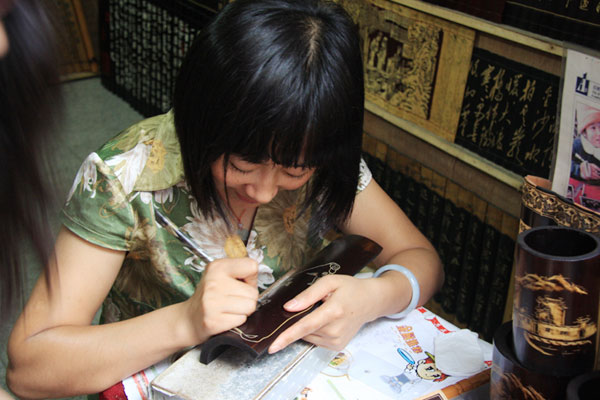
An artist carves a picture on a piece of bamboo in Hongchun village on July 28th, 2009. [Photo: CRIENGLISH.com]
Beneath the foot of Mount Huangshan sprawls a cluster of grey-tiled and white-walled dwellings, which are acclaimed as a museum of residential architecture that could rival the Forbidden City in scale or magnificence. It is Hongcun, a faraway village down in Yixian County, east China's Anhui Province, and this centuries-old village is becoming more and more attractive as its tourism industry picks up.
Cursory glimpses and hasty snapshots while being whisked through on a packaged tour are far from enough if you want to get to know the profound Hui culture. Hui refers to the present-day city of Huangshan and Jixi County, and the exquisite architecture of the homes, ancestral halls and memorial archways is the most expressive embodiment of Hui culture. The daily rhythm of time comes to life through the elaborate carvings of wood, brick and stone that are seen everywhere, each telling a story symbolizing people's wishes for prosperity, peace and longevity.
However, what really gets deep into your soul while wandering through the time-honourned houses and alleyways may be the spiritual legacy left by the incredible businessmen known as Hui merchants. They uphold a motto of "honesty, credit, righteousness and benefits" in their business practices and such thoughts permeate the interior design, ornaments and inscriptions of the houses.
Hui merchants who had gotten rich on tea and salt trade in east China often returned to the place of their roots to build new buildings and contribute money to rejuvenating local education. That helped build the strong Confucian ethics that still endure today, visible through many of the fading scroll paintings and sculptures that have survived centuries of decay and corrosion.
|
 涓枃绠€浣?/a>銆€|銆€


