涓枃绠€浣?/a>銆€|銆€


| Chu Artistic Legacy | |||
http://english.dbw.cn銆€銆€
2009-07-10 09:56:44
|
|||
|
In Chinese history, Chu was a kingdom located in what is now central and southern China during the Spring and Autumn period (722-481BC) and Warring States Period (481-221 BC). It was originally known as Jing and then as Jingchu. At the height of its power, the Chu State occupied vast areas of land including the present-day provinces of Hunan, Hubei, Chongqing, Henan, Shanghai and part of Jiangsu. People in the strong kingdom created Chu Culture standing up to the culture of Central Plains. In more than 800 years before it was subverted by Qin in 223 BC, Chu Culture and the culture in Central Plains joined in each other, becoming a rare and beautiful flower in Chinese ancient culture. Currently, an exhibition showcasing Chu cultural relics are now on display in Changsha, lasing from May 22 to August 30. More than 260 articles of selected cultural relics of Chu Kingdom including 4 national treasures, 38 key cultural relic articles and the No.1 invaluable treasure kept by Hunan Provincial Museum - the painting on silk on the theme of characters and Loong are expected to be displayed at the special exhibition. This exhibition is a remarkable opportunity to experience at first hand almost one hundred examples of the magnificent bronze and lacquerware items that represent the height of the Chu artistic legacy. They include the sword from the King of Yue and the spear from the King of Wu.
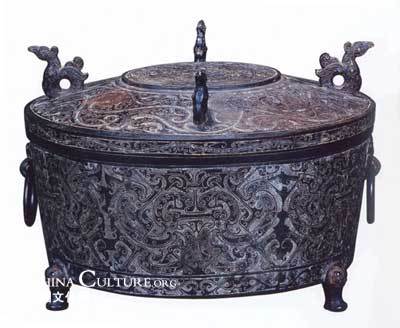
Among the highlights of the exhibition are a number of artefacts excavated from the tomb of the Marquis Yi of Zeng (d. c.433 BC). The discovery of this burial brought to light both the prosperity and artistic ingenuity of the Chu, but also gave many clues as to changes in social and ritual practices that were taking place as the Chinese bronze age began its steady decline. Among the ritual bronze vessels are examples of unprecedented ornateness, showing mastery of the complex technological processes involved in the creation of bronzes, most notably that of the lost wax technique. |
|||
| Author锛? 銆€銆€銆€Source锛? chinaculture.org 銆€銆€銆€ Editor锛? Wu Qiong | |||