|
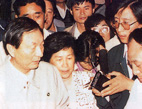
Brief Introduction of the 2nd China Harbin Fair
The 2nd China Harbin Fair was opened on June 15th, 1991 in Harbin. Compared with the first fair, the scale of this fair was bigger than the previous one; it was with 924 exhibition booths in the central hall. On voluntary basis, 129 companies in total attended the fair, an increase of 60 companies than the previous one. Seven trading delegations and 76 branch trading delegations were organized to attend the fair with a total of 3600 participants as well as 5700 foreign businessmen from eight countries.
The total volume of contracts signed in this fair for import and export commodities reached to US$2.9 billion, of which import and export contracts on barter trade valued at US$1.9 (each half for import and export), the import and export contracts by cash amounted to nearly one billion U.S dollars, which implied a mutual beneficiary structure and an obvious mutual complement for import and export commodity.
Economic and technical cooperation projects were negotiated and transacted very actively in this fair, with 70 contracts were signed valued at US$630 million including 36 contracting engineering projects, 18 labor cooperation contracts, 16 joint ventures, and intended agreements. These signed contracts and agreements marked a prosperous future and a further widened area for the economic cooperation between China and former U.S.S.R.
Main Concluded Projects
1. A contract on building Guangzhou food factory in Vladivostok USSR was signed between the Economic and Trade Department of Suifenhe City of China and USSR part.
2. Harbin Municipal Government signed a cooperative agreement with the Executive Committee of Khabarovsk Government of USSR, which includes setting up a joint venture enterprise for the production of the woolen sweater, running the project of leather processing in the form of joint venture or cooperation in Khabarovsk, as well as setting up a joint venture enterprise for color printing. Both sides also would cooperate in the fields of red brick, ginseng, royal jelly, sofa cloth and tourism etc.
3. The first project for economic and technological cooperation in this session and one of the largest key projects: Contract for the thermal power station project signed between China and USSR, Chinese part was in charge of designing, construction and decoration.1
4. Heilongjiang Orient International Corporation for Economic & Technological Cooperation undertook many engineering projects in USSR. The total fabrication cost of the projects was 430 million Swiss Francs. |
 涓枃绠€浣?/a>銆€|銆€


 Picture the 2nd Harbin Fair


