涓枃绠€浣?/a>銆€|銆€


| Frames of Reference | |||||
http://english.dbw.cn銆€銆€
2009-04-15 09:46:27
|
|||||
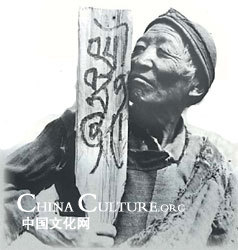
Photographer Lan Zhigui's favorite pictures are of the people, their lives and the landscapes in Zayul, Tibet. The photos Lan took from 1956-60 show Tibetans harvesting, shepherding, celebrating local festivals, or watching a rainbow in a valley in the picturesque area in the south of the region. These rarely seen, mostly black and white photos, are part of Lan's ongoing solo exhibition Witnessing the Democratic Reform - Photo Exhibit of Tibet 1950-70 by Lan Zhigui at the National Art Museum of China. "Tibetan culture has been an integral part of my life," says the 78-year-old from Chengdu, Sichuan province. A former apprentice in a private photo studio in Chongqing, Lan joined the 18th Corps of the People's Liberation Army and entered Tibet in July 1951 as a young PLA photojournalist. Lan witnessed and captured on film all the major changes in Tibetan society from 1951 to 1970, including its peaceful liberation,feudalistic serfdom society, quelling of riots and democratic reforms.
He also traveled in his spare time to most parts of Tibet, documenting local life and culture, having fallen in love with photography during his time at the photo studio. "I had come to see it as a miraculous tool to keep images alive," he says. "The moment I set my foot on the snowy plateau, I was fascinated with the enchanting landscapes, people's brightly colored costumes, unique traditions and the mysterious festivals and ceremonies." Lan was quick to learn the language and make Tibetan friends. He made one in particular Lazong Zhuoma, a local girl he married in 1960. He felt the passing of time and was compelled to act. "A photographer should capture the most exciting events of his or her time," Lan says. "I felt it my mission to capture fast-changing life and culture, just as I did in the 1980s as I traveled with my camera through the Qiang and Yi ethnic areas in Sichuan and along the Three Gorges." More than 1,000 of Lan's old photos about Tibet have survived, of which 100 are on show in Beijing. "It is amazing that Lan has managed to keep the negatives in supreme quality all these years," says Huang Jianpeng, curator of the exhibition and a researcher of Tibetan history. "These vintage photos are definitely of high historic and academic value." According to Fu Aimin, a photo researcher with Central University of Nationalities: "Lan's photos are the most coherent and comprehensive visual depiction of Tibetan society from the 1950s-70s that have been found to date." |
|||||
| Author锛? Zhu Linyong 銆€銆€銆€Source锛? chinaculture.org 銆€銆€銆€ Editor锛? Wu Qiong | |||||