涓枃绠€浣?/a>銆€|銆€


| Report: Tibetan population grows fast, language education stressed | |||||||
http://english.dbw.cn銆€銆€
2009-04-02 09:24:44
|
|||||||
|
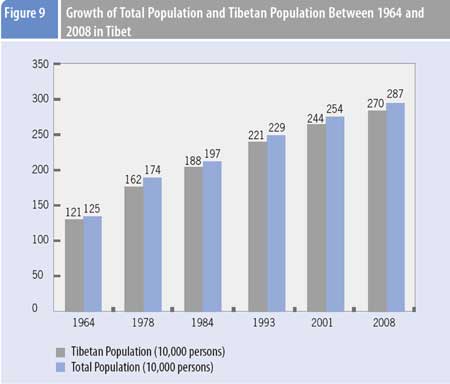
The population in China's Tibet Autonomous Region has grown rapidly over the past decades and the number of Tibetans make up more than 90 percent of the regional population, according to a report released Monday.
The report on Tibet's economic and social development, published by the China Tibetology Research Center, said although more and more people from the country's inland areas came to Tibet for work, the Tibetan population was still in an overwhelming majority, or more than 90 percent, of the regional population.
"The rapid growth of the regional population is a result of the rapid growth of the local Tibetan population," it said, adding that over the past decades, Tibet's population increased to 2.87 million in 2008 from 1 million in the 1950s. The accusation from some international non-governmental organizations that Tibetans would become a minority in the autonomous region with more Hans entering the region, was groundless, it said.
The report said the country's family planning policy, implemented since the 1980s that promoted only-child in most urban areas to curb excessive population growth, was not imposed in Tibet's agricultural and pastoral areas. In nearly 200 years before the suppression of the Dalai Lama's rebellion in 1959, Tibet's population growth was almost at a standstill, it said. Tibetan's life expectancy increased to 67 from 35.5 before 1959.
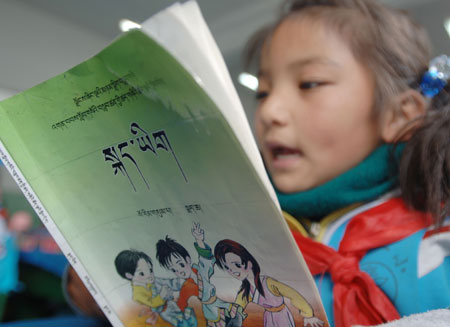
The Chinese government had attached great importance to Tibetan language education, and the Constitution and the ethnic regional autonomy law guaranteed free use of ethnic languages. Farmers and herders in Tibet, who make up 61.7 percent of the regional population, are entitled to free medical services thanks to more than 20 million yuan (294 million U.S. dollars) of medical subsidies each year. Medical conditions are better than the national average. Farmers and herders' average per capita income reached 3,176 yuan in 2008, 18 times that of 1978, the report said, adding the region's annual growth rate was more than 10 percent over the past three decades. |
|||||||
| Author锛? 銆€銆€銆€Source锛? xinhua 銆€銆€銆€ Editor锛? Yang Fan | |||||||