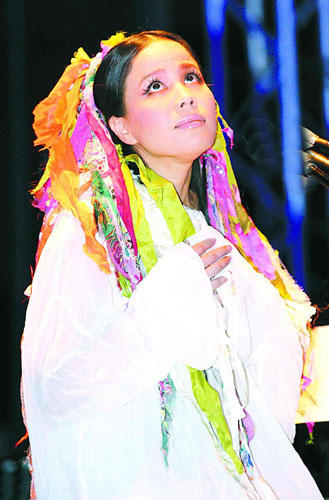
Chinese singer Zhu Zheqin, also known as Dadawa [File Photo: baidu.com]
Chinese singer Zhu Zheqin was named goodwill ambassador on Thursday in Beijing by the United Nations Development Program (UNDP) to enhance the protection of China's ethnic minority cultures.
A two-year-long protection plan called "Show the World: Culture-based Development Goodwill Action for Ethnic Minorities in China" was also initiated by UNDP. Zhu Zheqin, also known as Dadawa, was named ambassador.
The plan consists of two components, including "preservation and revival of the ethnic music" and "preservation and development of the ethnic handicrafts."
Zhu, who is famous for her music with ethnic elements, said she had traveled to many places and lived with minorities in the past ten years. "The arts of them touched me and influenced me a lot," said Zhu, who earned her reputation in 1990s by a song named "Sister Drum".
The UNDP initiative, covering Sichuan, Yunnan, Qinghai provinces, Tibet and Inner Mongolia autonomous regions, aims to preserve culture as well as to develop them, Zhu said.
"We hope it will provide more business and job opportunities to the local people," she said.
UN resident representative in China, Khalid Malik, said that the protection work had "special meaning" amid the global financial crisis.
"It will increase people's incomes in the ethnic minorities' residential areas and help solve the problems of the crisis," Malik said.
"The crisis will not last long but the cultures will," he said.
"Chinese ethnic cultures had influenced the country and the world. It's time to protect their culture."
Zhu Zheqin is the second goodwill ambassador for China after the actress Zhou Xun, who focused on environmental protection work, said Malik.
Globally, UNDP has six goodwill ambassadors, including tennis star Maria Sharapova, Japanese actress Misako Konno and prince Haakon Magnus of Norway.
 涓枃绠€浣?/a>銆€|銆€


