涓枃绠€浣?/a>銆€|銆€


| Rhinoceros Horn Carving | |||
http://english.dbw.cn銆€銆€
2009-01-06 09:41:34
|
|||
|
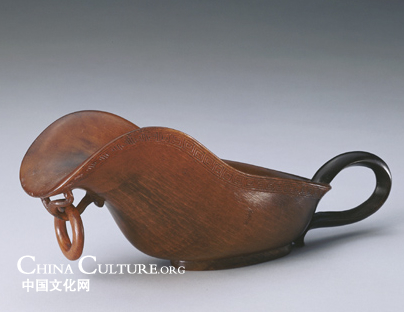
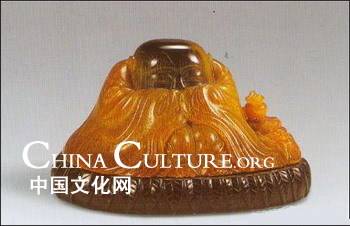
From early to mid-Ming, rhinoceros horn vessels were produced by the imperial workshop and reserved exclusively for the court. Works of this period are either plain or decorated with simple motifs, typified by minimal workmanship. During the Yongle period (1403-1424), the maritime expeditions of Eunuch Admiral Zheng He promoted maritime trade, which in turn brought about rapid development of the decorative arts. More horns were imported and private workshops were then allowed to participate in the industry. Henceforth, choices of themes and decorative motifs were enriched and diversified under the influence of different techniques and media styles, including bamboo and ivory carvings. With more scholars participating, scholarly themes appeared. Popular genres included landscapes, birds and flowers, pastoral gatherings, auspicious subjects and anecdotes from literature. Rhinoceros horn carvings gradually became popular in the latter half of the sixteenth century. The rarity and lustrous color of the material, augmented with various decorative features, gave horn cups of all shapes a common aesthetic quality. Nevertheless, it was the rare cups with unique shape that carried the deepest meaning. Unlike painting and calligraphy, rhinoceros horn carving was not an art of personal expression, but rather a commercial product of skilled craftsmanship in a specific social context. |
|||
| Author锛? 銆€銆€銆€Source锛? chinaculture.org 銆€銆€銆€ Editor锛? Wu Qiong | |||