涓枃绠€浣?/a>銆€|銆€


| Five Famous Kilns | |||||
http://english.dbw.cn銆€銆€
2008-12-03 09:37:44
|
|||||
|
China has a long history in porcelain, which developed from pottery making. The ceramic history can be traced back to the Neolithic age. Along with the development of ceramics,in the early period of the Shang dynasty (1783-1134 BC), the original green porcelain, or celadon, appeared. The Song Dynasty (960-1279) was a boom period following the Han and the Tang dynasties, when porcelain kilns were spread in the whole country, with different strong local flavors. The "Five Famous Kilns", including the Guan Kiln, Ru Kiln, Ge Kiln, Ding Kiln and Jun Kiln, are most famous. Guan kiln
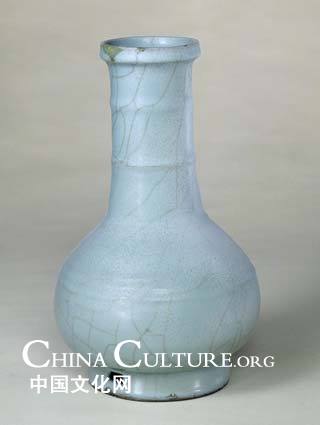
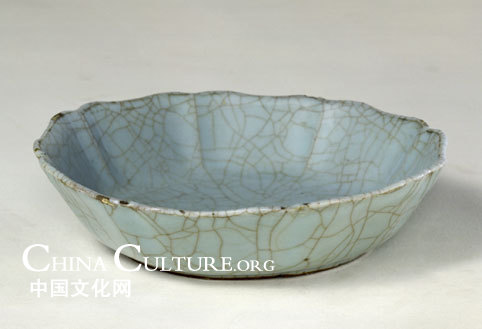
In Chinese, "Guan" means the government. The Guan Kiln was the government kiln that only produced fine porcelains for the royal family and court. Classified into the Northern Song Guan kiln in Bianjing (today鈥檚 Kaifeng city of Henan Province) and the Southern Song Guan kiln in Hangzhou in south China鈥檚 Zhejing Province, according to different Dynasties, the Guan kilns are boasted as the finest celadon porcelain. Strong and smooth roughcast, clear and shining glazes were characteristic of the Northern Song Guan Kiln's porcelains. And the Southern Song Kiln's porcelains had light green, gray or yellow glazes. Usually there were many cracks on the surface. The upper rim of the porcelains had a purplish color while the lower rim had a dark iron color. This was called "the purple mouth and iron foot." The main products are the bowls. Plates, bottles and washing vessels, most of them are in a simple and elegant style. |
|||||
| Author锛? Wang Nan 銆€銆€銆€Source锛? chinaculture.org 銆€銆€銆€ Editor锛? Wu Qiong | |||||