涓枃绠€浣?/a>銆€|銆€


| Clay Figurines | |
http://english.dbw.cn銆€銆€
2008-09-05 11:19:54
|
|
|
鈪? Clay Figurine Zhang of Tianjin Municipality
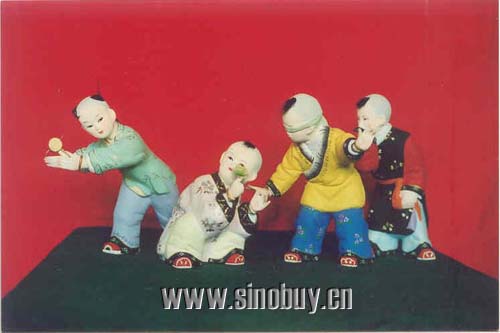
His clay figurines were very vivid and expressive, and Zhang and his figurines were soon well known in the surrounding area. Zhang not only inherited a legacy of traditional skills but also incorporated skills from other art forms such as painting, opera singing and Chinese folk wood engravings. He created more than 10,000 clay figurines during his lifetime, and his unique handicrafts became famous both at home and abroad. Clay figurines created by Zhang include heroes and villains from Chinese folk stories, novels, and operas as well as scenes from daily life. He used pure colloidal clay, and his figures are all vivid and expressive, reflecting rich regional and local customs. 鈪? Huishan Clay Figurines of Wuxi City, Jiangsu Province Huishan clay figurines from Wuxi, East China's Jiangsu Province date back 1,000 years. Compared with those found in northern China, clay figurines made in Huishan are short and their facial expressions are vividly depicted. They are more exquisite due to the refined tastes of the local people.
In the Qing Dynasty, there were over 200 clay figurine workshops and stores in Huishan, forming "a street of clay figurines," cultivating a number of professional craft workers. When the Empress Dowager Cixi celebrated her 60th birthday, the local officer from Huishan presented a set of clay figurines named Immortality Peach Gathering. From then on, Huishan clay figurines were officially recognized as articles of tribute to the imperial court. Huishan clay figurines include fine and coarse figurines. Coarse figurines are made from molds and produced in large numbers. However, fine figurines are made by hand in the shapes of oxen, tigers, the God of Longevity and so on. Generally speaking, Huishan clay figurines are short in stature, full, with big heads, and their facial expressions are vividly depicted. Bright red, yellow, green and blue colors are applied to them to make them more distinct and beautiful. One piece particularly representative of Huishan clay figurines is Da A Fu, meaning "great good fortune." It features two lovely, plump children, a boy and a girl, each holding a tiny lion. The figurine is considered a symbol of happiness and auspiciousness. 鈪? Fengxiang Clay Figurines of Fengxiang County, Shaanxi Province
The craft of making painted clay-figurines in Fengxiang has a recorded history of more than 3,000 years. According to archaeologists, the decorative designs of Fengxiang's figurines made in the Western Zhou Dynasty were different from those on bronze ware buried in the same period. The images of clay figurines typically included flowers, birds, fish, insects, as well as auspicious birds and beasts. The local villagers made these kinds of clay sculptures with patterns of birds and animals in their spare time. They believed the clay sculptures with certain kinds of colorful patterns could bring good luck to them or help them avoid bad luck. The figurines are made of local clay, which was mixed with pulp and painted after it was shaped. The colors of Fengxiang clay figurines are extremely bright, and with intensive contrasts. With a black outline, they are primarily scarlet, green and yellow. The clay sculptures look quite colorful with nice patterns containing many meanings. For example green means longevity, red stands for happiness throughout the year, pomegranates express the wish for more sons and more happiness, coins stand for making good money and peony flowers express wishes for happiness and health. The colorful figurines fall into three categories, namely, clay toys in the shapes of animals, hanging clay decorations, facial make up, tiger and lion heads, and standing figurines derived from folk and historical tales. The figurines cover a wide-range of subjects, ranging from facial makeup, folklore, historical stories and rural life, to animals with more than 170 designs. Their bold and short shapes are heavily exaggerated. In recent years, with the development of China's tourism industry, Fengxiang's clay figurines have become one of Shaanxi's most famous travel souvenirs. |
|
| Author锛? 銆€銆€銆€Source锛? chinaculture 銆€銆€銆€ Editor锛? Wu Qiong | |