 涓枃绠€浣?/a>銆€|銆€


| Profiting from a fresh outlook | |
http://english.dbw.cn銆€銆€
2012-10-11 08:55:18
|
|
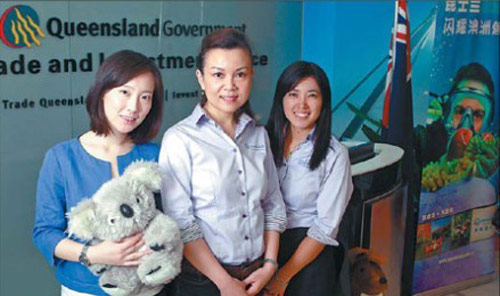 銆€銆€Grace Pan (center), Tourism Queensland's international director for the Chinese mainland, Hong Kong and Taiwan, and her colleagues in their Shanghai office. 銆€銆€There are many routes to enjoying success in the domestic market, Hu Yongqi reports in Beijing. 銆€銆€Despite being raised in a Chinese family in California, Jamie Lee regarded herself as a Westerner before she moved to Beijing 15 years ago. She was unable to speak Chinese and had no clue about the country's traditions. All she knew was US culture. 銆€銆€However, since 1997 she has learned the language and local business methods after working as a manager in a dental hospital in the capital. 銆€銆€"The way Chinese officials and travelers interact with each other is very different from the Americans I was familiar with," she said. "I had to learn everything from Chinese friends and then adapt that knowledge to business situations." 銆€銆€In 2005, Antonio Villaraigosa, the mayor of Los Angeles, recognized the potential of China's market. Villaraigosa's interest resulted in the establishment of the Los Angeles Tourism and Convention Board's Beijing office. 銆€銆€In 2006, Lee joined the office as regional director, heading up a team to promote LA as a destination for Chinese tourists. "Many people thought the board could hire a public relations company or an agent to promote our services. But the mayor decided that a dedicated office was essential, otherwise our services would not always be the main focus," she said. 銆€銆€Through the work of Lee's office, the number of Chinese visitors to LA has increased by 50 percent every year since 2006, rising to 130,000 in 2011. 銆€銆€In the past six years, the office - the only cultural and business exchange bureau established by a foreign city in Beijing - has functioned as a bridge connecting the cities, said Lee. 銆€銆€Currently, more than 100 offices have been established by foreign governments - mostly at state level - in Beijing, Shanghai and Hong Kong to promote trade and services. Most of the offices have a localized feel, with a chief representative and two or three Chinese employees. 銆€銆€The offices undertake specific tasks, such as investment promotion, to find new consumers and investors. They help overseas businesses to understand the local policies related to trade or investment, such as taxation and land rents. 銆€銆€Close to the customer 銆€銆€Beijing is one of four overseas offices the LA Tourism & Convention Board has established. Compared with hiring local agencies, foreign governmental departments have discovered the benefits of setting up offices in China. 銆€銆€The German National Tourist Board has two bureaus in China, one in Beijing and the other in Hong Kong. "We felt it was important to be in the market and close to the consumers and the local travel industry. We also need to understand the demands, the changes and the trends, and try to position our brand and products successfully," said Oliver Sedlinger, marketing director of the Beijing office. 銆€銆€Sedlinger said China's rapid economic development and rising incomes have made the country a vital market for the German tourism industry. During the past decade, the number of overnights by Chinese visitors to Germany has doubled. In 2010, China overtook Japan as the strongest source market in Asia. Last year, Germany saw overnights from Chinese customers increase by 21 percent from 2010. 銆€銆€Being based in Beijing means that Sedlinger and his colleagues are able to visit a wide range of second- and third-tier cities where they can inform Chinese travel companies about Germany's resources, provide them with contacts with German suppliers and help them design attractive and successful travel packages. 銆€銆€Sedlinger said German hotels and service providers are working hard to improve and adapt their products and services to the needs of Chinese travelers. 銆€銆€Jamie Lee holds the same view as Sedlinger, emphasizing that the travel industry in the US, and other countries, has to learn about the habits of Chinese consumers. 銆€銆€Lee said the Chinese always speak loudly and are known to "invade personal space" during conversations. Moreover, Chinese travelers must have hot drinking water in hotels and restaurants, while Westerners are more accustomed to drinking cold water. 銆€銆€"This sort of behavior isn't odd or offensive, just convention. So I have to tell service providers in Los Angeles how to adjust properly," said Lee. "That's what we do - reduce the differences as much as we can." 銆€銆€ |
|
| Author锛? 銆€銆€銆€Source锛? China Daily 銆€銆€銆€ Editor锛? Wu Qiong | |


