 中文简体


| Flowers for Buddha | |
http://english.dbw.cn
2011-04-27 10:07:34
|
|
|
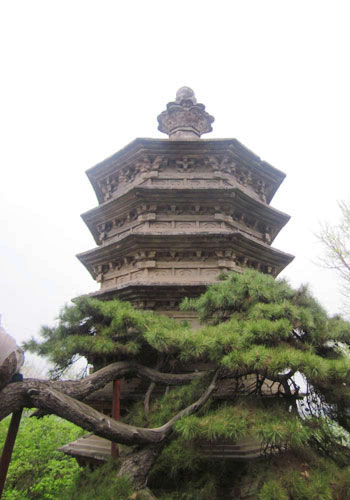
One ancient pine tree at Jietai Temple has managed to grow sideways, wrapping itself around a pagoda. [Photo:CRIENGLISH.com]
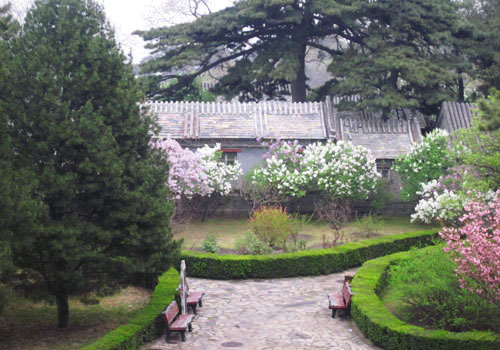
One of the gardens at Jietai Temple is dotted with fragrant and abundant clove tree blossoms. [Photo:CRIENGLISH.com]
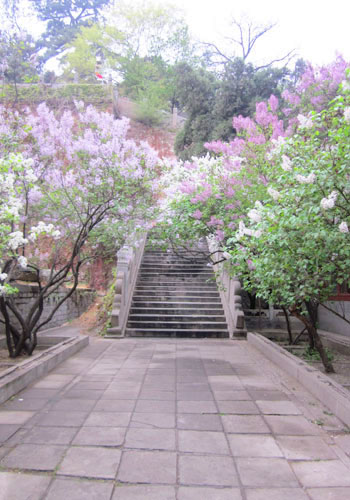
The clove trees at Jietai Temple blossom in yellow, purple and white. [Photo:CRIENGLISH.com] Emperor Qianlong immediately ordered 20 clove trees to be transplanted from the Yuanmingyuan (Old Summer Palace) Park to the temple grounds. During the Second Opium War, British and French troops destroyed Yuanmingyuan, making the clove trees at Jietai Temple the oldest ones in Beijing. The Clove Festival at Jietai Temple, which runs April 15-May 15, coincides with the birthday celebration for Shakyamuni (Chinese name: Shijiamoni), who was the founder of Buddhism. The celebration this year takes place on May 10 with prayers and readings of religious texts. Jietai's clove trees are in full bloom and can be seen from almost anywhere in the temple. The grounds are now home to more than 1,000 clove trees, including some from North Korea. The trees are characterized by their many tiny little flowers. One tree can contain hundreds or even thousands of little purple, white or yellow blossoms. The clove trees at Jietai Temple are not corralled into one large field, but rather nestled in corners and near doorways with a few together in one or two courtyards or spread throughout the temple grounds. In addition to the fragrant clove trees, visitors can admire Jietai Temple's ancient pine trees, including one that has managed to grow sideways and wrap itself around a pagoda. A tea-tasting activity is also held at the temple, because the mountain spring water improves the quality of the beverage. Jietai Temple is an out-of-the-way trip for Beijing city dwellers, but its secluded location has succeeded in protecting some of Buddhism's most precious trees. A daytrip to the ancient temple provides visitors with a scenic, historically rich background for viewing delicate, abundant clove flowers as well as an opportunity to get some fresh air. |
|
| Author: Angela Pruszenski Source: CRI Editor: Wu Qiong |
|


