 中文简体


| Flowers for Buddha | |
http://english.dbw.cn
2011-04-27 10:07:34
|
|
|
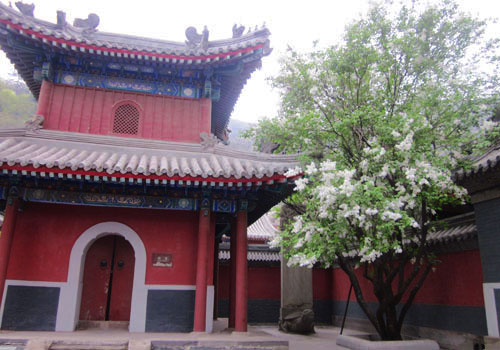
Clove trees can be found throughout the Jietai Temple grounds, planted in corners or next to doorways. [Photo:CRIENGLISH.com] 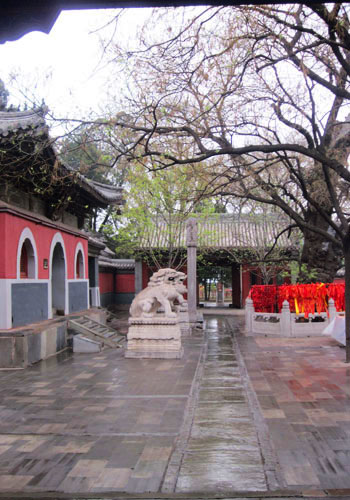 Jietai Temple, nestled in the mountains west of Beijing, was built during the Sui Dynasty (581-618 AD). [Photo:CRIENGLISH.com] Beijing's Jietai Temple is nestled in the mountains west of the capital between cliffs and hills so that most people might miss it altogether. An ideal place to escape the bustle and politics of city life, Jietai Temple has also been a safe haven for one of Buddhism's sacred trees, the clove tree. According to Zhou Jinshan, Director of the temple's Cultural Research Center, Jietai Temple was built during the Sui Dynasty (581-618 AD), although stones at the site indicate that the grounds had been used prior to this time. Jietai Temple rose to prominence for having the largest ordination alter for monks in the country. But the temple's first crop of colorful clove trees did not arrive until 1753. Emperor Qianlong of the Qing Dynasty visited Jietai Temple that year and found the red walls against the green temple roofs and evergreen trees boring, so he recommended that some colorful flowers be planted. The abbot of the temple objected, saying that only trees sacred to Buddhism -- clove and banyan trees -- would be acceptable. "This part of the country is too dry and windy for banyan trees to grow, so many temples plant clove trees instead," Zhou said. |
|
| Author: Angela Pruszenski Source: CRI Editor: Wu Qiong |
|


