 中文简体


| Folklore Museum preserves Chinese traditions | |
http://english.dbw.cn
2011-02-21 10:56:52
|
|
|
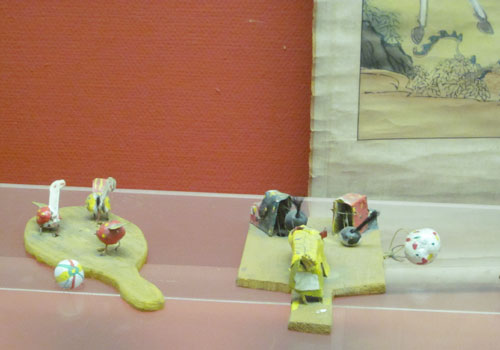
Traditional Spring Festival children's toys from the early 20th century are on display at the Beijing Folklore Museum. [Photo:CRIENGLISH.com]
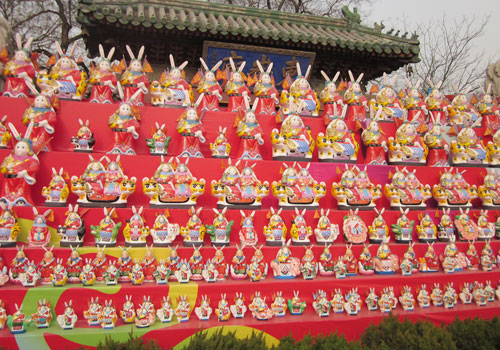
Rabbits dominate the entrance to the Dongyue Temple/Folklore Museum Temple Fair on Tuesday, February 8, 2011. [Photo:CRIENGLISH.com] Qu Yuan's story goes back even further to the Warring States period 2,000 years ago. According to legend, he tried to advise his king how to achieve peace, but was ignored. Other officials routinely made fun of him until Qu Yuan was removed from office and banished. He wrote the famous poem "Li Sao" ("On Encountering Sorrow") and drowned himself in the river the next day after hearing his country had been conquered. People raced dragon boats to save him, but were unsuccessful. In the end, they poured rice into the river to keep fish from nibbling his body. This story is the basis for the Dragon Boat Festival, or Duanwu Festival, which is also held on the fifth day of the fifth lunar month. The Traditional Festivals exhibition was a great add-on to the temple fair held at Dongyue Temple during the Spring Festival holiday. "The temple fair at Dongyue Temple dates back to the Yuan Dynasty," Guan said. "It is one of the oldest temple fairs in Beijing. People come here to pray for good fortune, good health and a safe life." In addition, the temple fair featured traditional performances and activities, as well as merchant booths with traditional festival souvenirs such as pinwheels and clay rabbits. While the temple fair is small as compared to that of Ditan Park, it has managed to maintain the traditional aspects of old Beijing temple fairs. The Beijing Folklore Museum is an excellent complement to an afternoon exploring the drama of Taoism at the Dongyue Temple, but visitors who have the chance should definitely make the trip during a holiday celebration. Logistics Address: 141 Chaowai Avenue, Chaoyang District 朝阳区朝外大街141号 Subway: Line 2, Chaoyangmen Station, take exit A and walk five minutes east along the avenue. Museum hours: 9 a.m.-4:30 p.m. (closed on Mondays) |
|
| Author: Angela Pruszenski Source: CRI Editor: Wu Qiong |
|


