 中文简体


| Folklore Museum preserves Chinese traditions | |
http://english.dbw.cn
2011-02-21 10:56:52
|
|
|
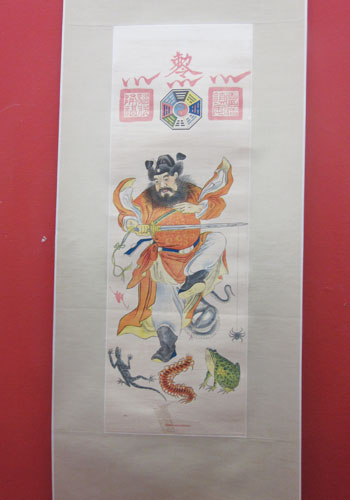
Zhong Kui's portrait is displayed during the Spring Festival and Dragon Boat Festival to vanquish evil spirits. [Photo:CRIENGLISH.com]
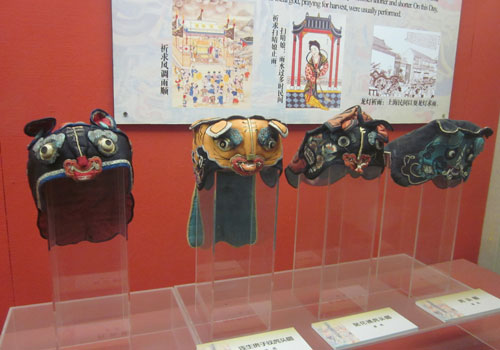
Traditional tiger hats worn by children during festivals are on display at the Beijing Folklore Museum. [Photo:CRIENGLISH.com] The Beijing Folklore Museum is a hidden surprise behind the Dongyue Temple in Chaoyang District. While housing a museum inside a temple may seem unusual, the Dongyue Temple has been a center of folk culture in Beijing for more than 700 years. Opened in 1997, the Beijing Folklore Museum holds rotating exhibitions to promote Beijing's old folklore culture. The current exhibition unveiled in June 2010 features more than 300 items detailing traditional Chinese festivals. The displays in the three first-floor exhibition rooms introduce 20 Chinese traditional holidays in both Chinese and English as well as artifacts related to each. Relics include children's toys from the early 20th century, Qing Dynasty rabbit figures, traditional tiger hats and loads of paintings. But object descriptions are only in Chinese. The museum typically receives more than a hundred visitors a day and many more during festivals, according to Guan Xin, Deputy Curator of the Beijing Folk Museum. He said the museum fills a need in the increasingly modern city. "Chinese love to come here to recall the olden days, but many foreigners also come here to get a taste of traditional culture," Guan said. Some characters of interest in the Traditional Festivals exhibition are Zhong Kui and Qu Yuan. Zhong Kui, who supposedly lived during the Tang Dynasty, had the top score on the imperial service examination, but was disqualified because of his ugliness. As a result, he committed suicide on the palace steps. Later, the emperor dreamed that Zhong Kui ate a ghost who was stealing palace treasures and worshipped him as the vanquisher of ghosts and evil beings. The Chinese traditionally display his picture on unlucky days to ward off evil spirits, such as the fifth day of the fifth lunar month, which is akin to Friday the 13th in western cultures. In some rural areas, people also put up Zhong Kui's portraits for the Spring Festival to scare away evil spirits that come with the New Year. |
|
| Author: Angela Pruszenski Source: CRI Editor: Wu Qiong |
|


