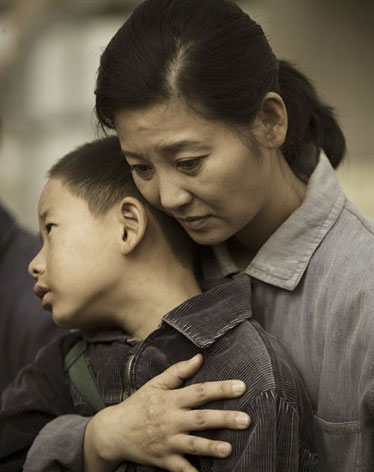
A scene in the Chinese film "Aftershock" [Photo: CFP]
An exclusive deal between AMC Entertainment and China Lion Film Distribution will bring up to 15 Chinese films per year to American cinemas to be released on the same dates in both countries, "The Washington Times" reports.
The move, which comes as China is exporting some of its most popular films to American cinemas courtesy of AMC Entertainment, runs contrary to the usual practice of releasing foreign-language films in the United States months after their home-country releases and screenings at American film festivals.
AMC Entertainment is currently showing "Aftershock", the highest-grossing film in China's history, not in traditional subtitle-friendly art house theaters but in multiplex cinemas alongside Hollywood blockbusters.
"Aftershock" uses the devastating Tangshan earthquake of 1976 and Sichuan earthquake of 2008, which killed 242,000 and nearly 69,200 people, respectively, to frame the story of a young mother forced to choose which of her two children to save.
The film opened in the San Francisco Bay area last month and recently expanded to 23 AMC screens in eight U.S. markets with sizeable Chinese-American populations, including two venues in the Washington, D.C. area.
"Aftershock" earned more than $100 million in China. The film is being shown in American cinemas with its original Chinese soundtrack and subtitles in English and Chinese.
Chinese films have traditionally reached the United States via independent theater houses such as the Landmark Theatres chain. The AMC gambit could change that pattern while extending China's cultural reach, the report said.
In addition, AMC boasts the kinds of resources that independent mom-and-pop theaters often lack.
Sean Phillips, Executive Producer of Yahoo! Movies, called it a bold and calculated move for foreign movies such as "Aftershock" to bypass traditional art-house venues.
Robert J. Lenihan, AMC's President of Programming, said in a statement that the deal was similar to others that the company had struck with Bollywood and Latin America-based films.
Doug Jones, Associate Programmer for the Los Angeles Film Festival, said he wondered whether AMC could reverse behavior patterns of foreign-film viewing in the United States where audiences for such movies have been shrinking for years. Many ethnic and religious communities in the U.S. have set up their own distribution systems to see films from their homelands either through private screenings or online downloads.
Jones said it was shrewd for Chinese film companies to seek entry into American movie theaters, adding that one way the international community could learn about a given culture was through its film exports.
The new film deal also could be another way for China to expand its cultural interests abroad, the report said. It noted that this year's blockbuster remake of the American film "The Karate Kid" was shot in China, showing the country's natural beauty and casting its cultural traditions in a positive light.
 涓枃绠€浣?/a>銆€|銆€