涓枃绠€浣?/a>銆€|銆€


| Radical Reinvention: Matisse in New York | |||
http://english.dbw.cn銆€銆€
2010-09-26 12:22:34
|
|||
|
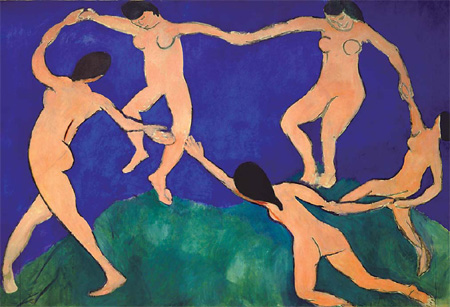
The Museum of Modern Art in New York is presenting another side of the artist Henri Matisse, a darker side. Judith Huang has the story. Most people know Henri Matisse (1869-1954) for his elegant, simple shapes in bright, optimistic colors. However, the exhibition Matisse: Radical Reinvention, a collaboration between the Museum of Modern Art and the Art Institute of Chicago, reveals a very different Matisse: This is Matisse at his boldest and darkest. Judith Huang The exhibition's premise is that between his return from Morocco in 1913 and his departure for Nice in 1917, Matisse took his art in an assertive new direction. His paintings from this period are experimental, increasingly concerned about the act of art-making itself, as opposed to art as representation of its subject. This casts Matisse as a proto-expressionist, anticipating the work of the likes of 20th-century great Jackson Pollock. The more than 100 works on display feature scratched-out paint, leftover pencil marks, and blatant signs of reworking which Matisse made no effort to conceal. Perhaps the best way to understand what he was doing is to compare these experimental canvases to his sculpture. The curators have cleverly juxtaposed these with his canvases. Matisse frequently worked on several pieces simultaneously. In the first gallery, Blue Nude (1907) hangs beside Reclining Nude (1) (1907) - both works feature women in repose, with the painting clearly modeled on the sculpture. In Blue Nude, the numerous layers of paint indicate Matisse's fervent reworking of the figure. The effect is that of a bold display of the process of painting. You can see where Matisse corrected himself, where he has decided to shift the figure, sculpting the paint as he would the clay. |
|||
| Author锛? 銆€銆€銆€Source锛? xinhua 銆€銆€銆€ Editor锛? Yang Fan | |||