涓枃绠€浣?/a>銆€|銆€


| BP achieves "desired outcome" in "static kill," most spilled oil gone | |||||
http://english.dbw.cn銆€銆€
2010-08-05 14:24:57
|
|||||
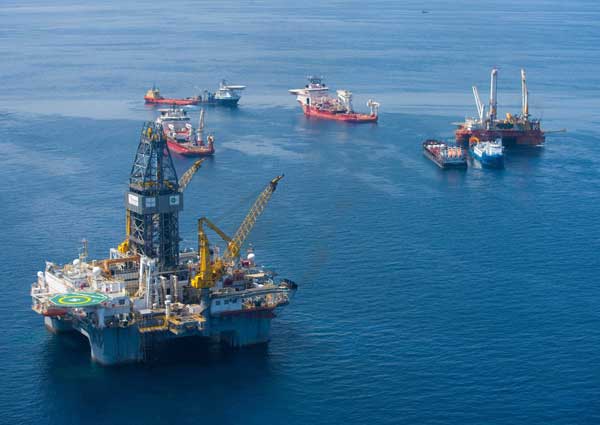
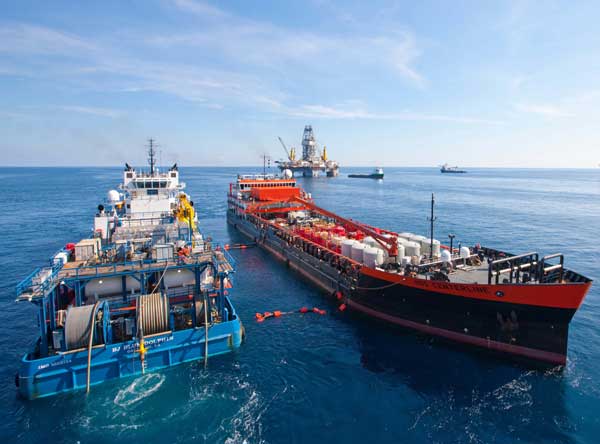
Though the "static kill" appeared to be successful in plugging the leak, both U.S. Coast Guard Admiral Thad Allen, who is tasked to handle the oil spill, and BP officials said that relief wells being drilled are the "answer" to sealing the ruptured well for good. "We've pretty much made this well not a threat, but we need to finish this from the bottom," said Allen. BP also said in its statement that "a relief well remains the ultimate solution to kill and permanently cement the well." The "static kill" would be followed by a "bottom kill" after a relief well intercepts the underwater gusher. BP said its first relief well, which started May 2, has set its final 9 7/8-inch casing. Operations on two relief wells were suspended during static kill operations. "Depending upon weather conditions, mid-August is the current estimate of the most likely date by which the first relief well will intercept the Macondo well annulus," the company said. Also on Wednesday, another piece of good news came from a government report, which said 74 percent of the oil that leaked from the BP well has been collected, dispersed or evaporated. The study, jointly-conducted by agencies including the National Oceanic and Atmospheric Administration, the U.S. Geological Survey and the Department of the Interior, said that of the total amount of oil that was spewed into the Gulf of Mexico, just 26 percent remains in the water, either on or just below the surface as light sheen and weathered tar balls.
The tar balls are either washing up shore, being collected from the coastlines, or buried in sand and sediment and are in the process of being degraded, according to the report. The report and BP's so-far successful "static kill" operations bolster a top U.S. energy official's statement Wednesday that the months-long spill crisis is "turning a corner." "We definitely are making progress. The oil hasn't been leaking for some time," Carol Browner, director of the White House Office of Energy and Climate Change Policy, said on CNN. "The static kill is going well, but ultimately, it's the relief wells we ordered drilled that will be the 'final kill-kill.' Probably, in the next 10 to 14 days that will be done, but (it was) an important step last night," Browner said. White House spokesman Robert Gibbs on Wednesday hailed the " beginning of the end" of efforts to stop the leak and contain the oil in the Gulf of Mexico. "It is sort of the beginning of the end of the sealing and containment phase of this operation," Gibbs told reporters. However, he also said: "There's a lot of reasons why there's no ' Mission Accomplished' banner." "There's a lot of work to do," he said. "We're not leaving the area, and more importantly, we're not leaving behind any commitment to clean up the damage that's been done and repair and restore the Gulf." <<previous [1] [2]
|
|||||
| Author锛? 銆€銆€銆€Source锛? xinhua 銆€銆€銆€ Editor锛? Yang Fan | |||||