涓枃绠€浣?/a>銆€|銆€


| Excavation of ancient general's tomb throws up new mysteries | |||
http://english.dbw.cn銆€銆€
2010-06-13 14:16:42
|
|||
|
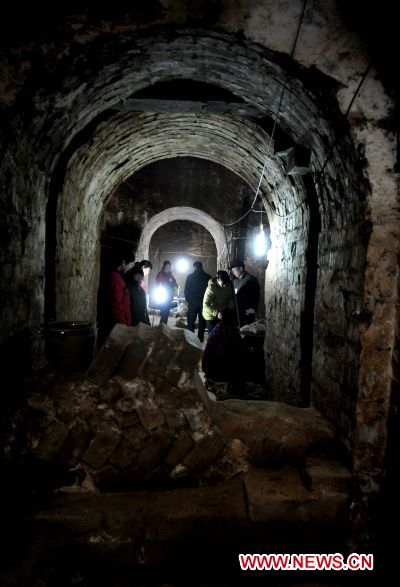
NEW FINDINGS During CCTV's live broadcast to mark the fifth Chinese Cultural Heritage Day Saturday, a ninth stone stele engraved with characters showing the name of a weapon used by the general from the No. 2 tomb was unearthed. However, the stele's upper part was missing. "The missing fragment should carry the engraved characters of Weiwuwang or the King of Wei like the eight other steles. However, all of the steles and stone carvings with the king's name have suffered human damage," said Liu, of the CASS. He said the severity of destruction surprised archaeologists. Besides the damage to items with the king's name, the male skull discovered in the front of the main chamber indicated that the body had been dragged out the coffin and the face smashed. Experts assumed that Cao Cao's rivals caused some of the destruction as well as tomb robbers. OTHER INTRIGUING FINDINGS Archaeologists are also studying the 6-meter high main chamber's ogive, or pointed arched, roof, similar to that of a church spire, which is rare for tombs of that period. Many stone and pottery miniatures of living necessities were unearthed from the tomb, such as a hogpen with the function of a toilet, a stone well, ancient musical instruments and writing desks. Liu said many items suggested the tomb master, though a warlord, was immersed in the arts. This complies with historical records showing Cao Cao was a military strategist, veteran politician and man of letters. |
|||
| Author锛? 銆€銆€銆€Source锛? xinhua 銆€銆€銆€ Editor锛? Yang Fan | |||