涓枃绠€浣?/a>銆€|銆€


| Winners, losers to emerge as market cools | |
http://english.dbw.cn銆€銆€
2013-09-03 09:11:22
|
|
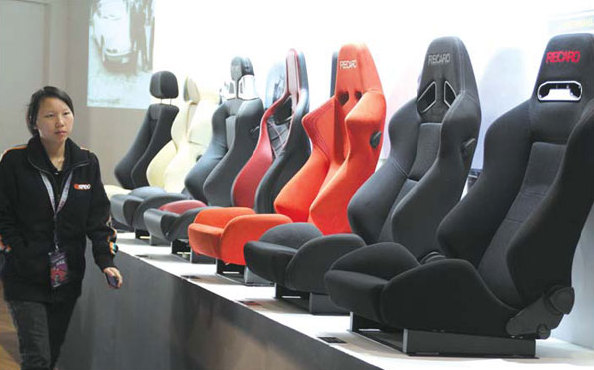 Domestic parts suppliers now face challenges from global leaders making inroads in the Chinese market. [China Daily] Given that China's auto market is projected to grow at a rate of between 5 and 7 percent in the next five years, the gap will likely widen between winners and losers, according to AlixPartners, a global business advisory firm. These findings were reported in the 2013 China Automotive Outlook, which AlixPartners released on Aug 28 in Beijing. Based on interviews with more than 100 senior domestic and foreign executives in China's auto industry, the report highlights development trends as well as the challenges and opportunities faced by automakers and parts producers. On the production side, competition for market share in China is intensifying, while overcapacity among local automakers remains a significant issue. The average capacity utilization rate among Chinese automakers remains below 65 percent, with 80 percent considered necessary to maintain profitability, according to the survey. Capacity utilization is defined as the percentage of potential production capacity that is actually being utilized at any given time. According to the study, global brands in China have split into clear winners and losers. The top brands have consistently strengthened their leading market share, whereas the weaker companies are seeing declining sales or fighting to maintain their position. Chinese brands The report also found that on the domestic front, Chinese brands are continuing to struggle to gain market share in the key segment of sedans, which is by far the largest segment of the market. Meanwhile, local brands are facing increasing pressure in segments at the lower end of the market that they have traditionally dominated. However, the study pointed out that not all the segments are gloomy for domestic brands. Though international manufacturers have traditionally relied on the SUV sector for much of their profits, they are increasingly facing threats from domestic players like Great Wall, which now holds a leading position in the country's SUV segment. On a positive note for the global brands, European carmakers continue to dominate the luxury car segment, with BMW and Audi leading the way. BMW sold 404,000 units in 2012 and 228,000 units in the first half of 2013, while Audi moved 309,000 last year and 183,000 units in the first half of this year. Mercedes-Benz trailed close behind with sales of 202,000 units in 2012 and 99,000 units in the first six months of this year. Though growth in this segment has slowed down relative to the boom seen in recent years, the rate in the luxury market continues to outpace that of the market overall. For many second-tier players, the Chinese market is still characterized by a large number of production plants for one or several models, according to the study. However, very few plants run by Chinese automakers achieve volumes of more than 100,000 units for each model, and none produces more than 500,000 units in total. Meanwhile, the world's leading production facilities can roll out several million units each. Leading global manufacturers, such as Volkswagen and GM, are poised to set up giant Chinese facilities - which were called by them as "mega platforms" - that will be used to produce almost their full product portfolio for sale in the global market. Given this trend, AlixPartners predicts that Chinese automakers may have only three to five years to match the scale of their competitors or they will face mounting revenue and profit pressure due to lack of scale and cost advantages.
|
|
| Author锛? 銆€銆€銆€Source锛? xinhua 銆€銆€銆€ Editor锛? Yang Fan |
|