 涓枃绠€浣?/a>銆€|銆€


| Twelve Beauties | |||||||||||
|
|||||||||||
http://english.dbw.cn銆€銆€
2012-06-26 10:11:02
|
|||||||||||
|
The lady in this picture is depicted admiring the flowers in the courtyard while holding a Ruyi scepter. The auspicious Ruyi ("as you wish") scepter was a popular gift in the Qing dynasty. In the garden, the purple, pink, white, and red peonies are most prominent. For its opulence, grace, and fragrance, the peony is called the Prince of Flowers and is a symbol of an auspicious, thriving and prosperous future, while the Ruyi scepter carved from bamboo in the form of Lingzhi mushroom signifies wish fulfillment. Together they combine to express "Wished for Prosperity and Position." 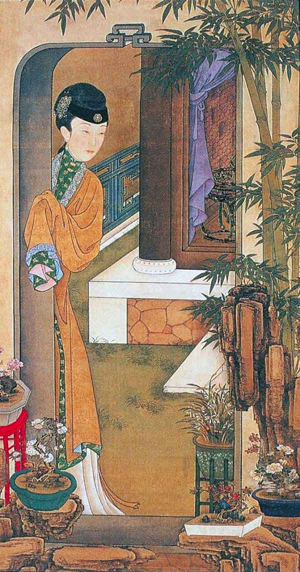
A Beauty at Leisure: Leaning on a Gate Gazing at Bamboo
This courtyard is full of flowers, grasses, bamboo, decorative rocks, and an array of miniature landscapes in containers (pen jing) that include orchids and Chinese rose. The lady leaning on the gate wistfully gazes, perhaps with romantic yearnings, at the spring colors filling the garden. 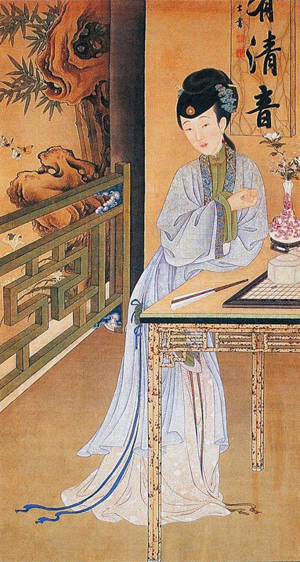
A Beauty at Leisure: Watching Butterflies in Summer
|
|||||||||||
| Author锛? 銆€銆€銆€Source锛? China culture 銆€銆€銆€ Editor锛? Yang Xiaoming | |||||||||||


