中文简体 | 中文繁体 | Партнеры | 日本語 | 한글
your position :English > News > China  content
China's cash-strapped small firms ring alarm bells
  • Anything is possible in luxury private planes
  • Enjoy magic hot springs in Japan
  • 50 unmissable tourism destinations in the world II
  • Trip to water town Zhouzhuang, China's Jiangsu
  • Qarhan Salt Lake in China's Qinghai
  • http://english.dbw.cn   2011-10-10 10:25:48
     

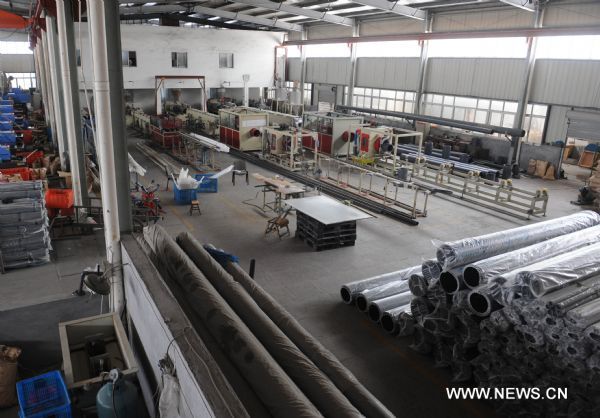
    A powered-off workshop is seen empty in Wenzhou, east China's Zhejiang Province, June 30, 2011.    Small and medium enterprises (SME) in Zhejiang struggle hard amid tightening monetary policy and rising costs, as growing financial troubles among SMEs pose a challenge to Chinese economy. In the current context of government credit tightening, the financing cost of SMEs getting access to credit has been pushed high. The alternative, going to the private lenders, forces higher annual interest rate up to 30%, according to a report from a provincial association for those enterprises.  Moreover, greater difficulty accessing to credit comes at a time of other economic challenges.  Businesses are facing higher labor costs as surging prices of food, rent and consumer goods pushes up wages. Wages among SMEs in Zhejiang are estimated to have risen up to 30% since a year ago. This phenomenon squeezes the already thin profit margins and even leaves employment unaffordable. According to the Global Times, export-oriented companies' average profit margin fell as low as 1.4% in the first two months of 2011.  Raw materials prices have also pose a problem. Though the government attempts to curb domestic commodity prices, international commodity prices have spiked, leading to price rises at home for goods needed as inputs for manufacturers. Plus constant periodic power shortage in summer worsens the manufacture as well. However, a report from the provincial industrial and commercial bureau said the Prosperity Index for private sectors remained high in the second quarter, as the number of new private companies saw a year-on-year increase of 10.67% to 63,800 as of June 25 this year.  The threat of massive SMEs cannot be taken lightly. SMEs account for about 80% of China's manufacturing employment, according to Forbes.  Wenzhou is renowned for the role that SMEs play in its lively private economy, and it has a history of being an economic model for other cities in the manufacturing hubs of the Yangtze River delta. (Xinhua/Han Chuanhao) (cxy)

    A powered-off workshop is seen empty in Wenzhou, east China's Zhejiang Province, June 30, 2011.
    Small and medium enterprises (SME) in Zhejiang struggle hard amid tightening monetary policy and rising costs, as growing financial troubles among SMEs pose a challenge to Chinese economy. (Xinhua/Han Chuanhao)

    By Wang Guanqun

    BEIJING, Oct. 10 (Xinhuanet) -- China's small businesses turned to be the first to ring the alarm as the country is walking a fine line between fighting inflation and maintaining growth.

    Some entrepreneurs have disappeared and others have jumped off buildings almost every week since April in Wenzhou City, an entrepreneurial capital in eastern China's Zhejiang province, Xinhua reported.

    The sudden disappearance of the business owners has revealed a surprisingly gloomy picture for the small and medium-sized enterprises (SMEs) in China.

    RUNAWAY BOSSES

    According to a Xinhua investigation, at least 80 cash-strapped businesspeople in Wenzhou have skipped town or declared bankruptcy to invalidate more than 10 billion yuan (1.6 billion U.S. dollars) in debt.

    Just last month, two local entrepreneurs in Wenzhou killed themselves by jumping off the buildings and another broke his leg in a similar suicide attempt.

    The tragedies in Wenzhou are extreme cases of private SMEs struggling to survive a liquidity crunch amid the country's macro control policies set to curb inflation and cool down the over-heated property market.

    In Wenzhou, one-fifth of the 360,000 small and mid-sized businesses have stopped operating due to cash shortages, according to the city's council for small and medium-sized enterprises.

    Of the 855 companies surveyed by the Wenzhou Economic and Information Commission, more than 76 percent said they are almost out of money and are struggling to continue production.

    But many cash-strapped firms are unable to borrow money from banks, and some have turned to China's underground lending market to pool money from individuals and firms.

    The steep rates of the informal loans pushed some businesses to the brink of collapse.

     [1] [2] [3] next

    Author:    Source: xinhua     Editor: Yang Fan

    share: