中文简体


| Specialties of Ningxia | |
http://english.dbw.cn
2011-09-08 15:16:45
|
|
|
Wolfberry
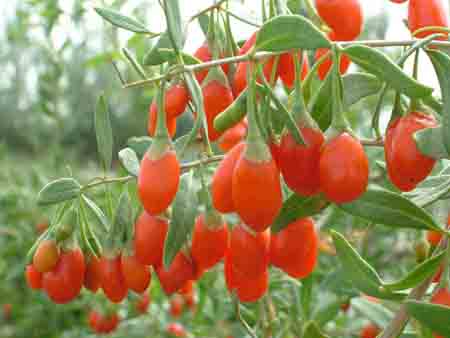
Wolfberry is one of the best-known products of Ningxia and also ranks on top of the five specialties of Ningxia. Over the years, wolfberry produced in Ningxia is among the best of China for its outstanding quality and high production. Wolfberry is indeed conductive to improve one’s health. It is good for one’s lungs, livers, kidneys and eyes and also helps to invigorate one’s body by providing energy and strengthening bones. Tan Sheep’s Skin
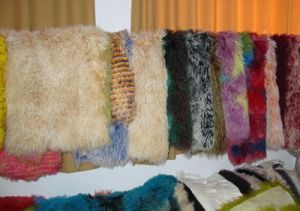
The ancestor of the Tan Sheep is the Mongolian sheep and migrated to the grassland along the Yellow River and begun to breed there. Then it becomes an ideal fur type sheep. Tan Sheep of Ningxia is one of outstanding fur type sheep in China and its fur is known as Ermaopi. Ermaopi is white as jade, beautiful and good to keep warm. In addition, it is very light and among those well-known light furs. Ermaopi Fur will never bind together no matter how long it is worn. These characteristics are incomparable by no other furs. The wool of Tan Sheep is long, even, soft, puffy and of good elasticity. It is high quality material for carpet, scarf and sweater. The cashmere clothes and jacquard blankets produced by Ningxia are famous worldwide for its quality and uniqueness.
Helan Stone
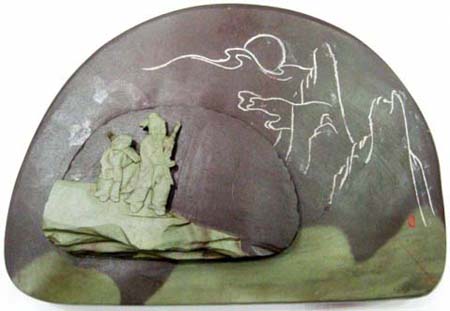
Helan Stone is a sort of rare materials for its even structure, soft quality and good flexibility. Ink stone made of Helan Stone is durable and quick to generate ink that is hard to agglomerate. The capped ink stone is like a sealed container and is able to keep the ink fresh for three days, for which it is welcomed by lots of painters and calligraphers. The earliest records of Helan Stone and ink stone made of it could be found in Ningxia Governmental Records. In the section of Geography and Mountains there is such description that Mount Penholder is located at Xiaogongzhongkou of Helan Mountain. With three towering mounts, it looks like a penholder. At the foot of the mountain there is a kind of purple stone that can be made into ink stone, which is known as Helan Stone. Licorice Root
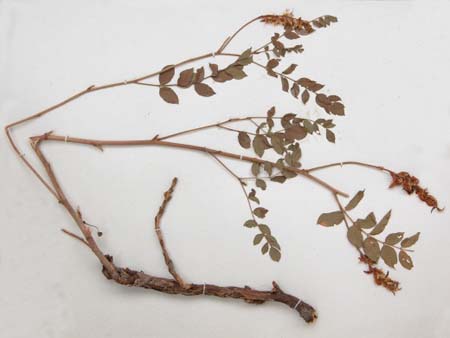
Licorice Root is a kind of herbal medicine. Its stalks and roots, which are cylinder, are for chemical use. They are 25 to 100 cm long and the diameter varies from 0.6 to 3.5 cm. Its outer skin shows different tightness and is red brown or grey brown. On the surface of the stalks and roots remain sprouts and there are marrow stuffed inside. It smells sweet and special. Its medical functions include cleaning away heat, toxic materials and phlegm, stopping cough and curing stomachache. Licorice Root favors arid climate with much sunlight and low temperature and grows in arid or semi-arid deserts and grassland and loess hilly areas. Yanchi County is located in the eastern part of Ningxia Hui Autonomous Region. It is to the east of Shanshui River and neighbors Shaanxi Province, Gansu Province and Inner Mongolia Autonomous Region. Yanchi County has a vast piece of grassland and rich production of licorice root. In summer every year, licorice flower can be found everywhere and Yanchi County is also known as the Town of Licorice Root. Cassia Seed
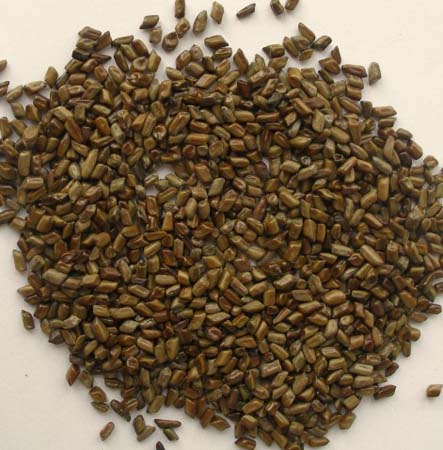
Cassia Seed is a sort of herbal medicine and has medical effects as clearing away heat in liver, curing rheumatism, protecting kidney and eyes. In addition to those medical effects, it is also rich in vitamins, amino acid, fat and carbohydrate. In recent years, it has drawn increasing attention for its medical effects. One will no longer be embarrassed by constipation after drinking it for a period of time. The tea made of cassia seed is a perfect drink in summer. It is very simple to make cassia seed tea. One just put 15 – 20 grams of cassia seed into hot boiled water. Some sugar could be added according to personal preference. One can have it just like tea for several times a day. It will be much better when drunk with wolfberry and chrysanthemum. However, cassia seed is cold-natured and not suitable for those who suffer from diarrhea and stomachache. Barley Candy
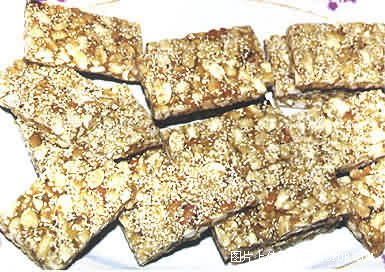
Barley Candy is a kind of traditional candies of Ningxia Autonomous Region loved by local people. After the autumn harvest, the Hui people will have barley aired and begin to mill barley and make sugar. The custom dates back to over two hundred years ago. The mountainous region of Ningxia is among the most important production areas of barley, which provide good conditions for the Hui group to make candy. They make candy not only for themselves but also for sales. During the Republic of China, there had been dozens of workshops producing barley candy, of which Mao’s Candy made by the Hui people from Maoyi Moutian and Maoyichuan of Huibei Town, Pingluo County was the most famous. The candy tastes hard, crispy and sweet and it has a flavor of bean. It is rich in proteins, fat, vitamin and calcium, phosphor and ferro. It would help to clear away heat, digest and prevent diarrhea
Watermelon Grown in Gravels and Sands
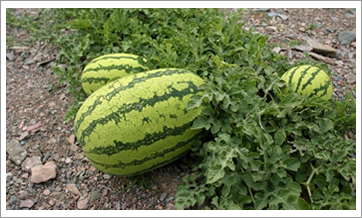
The watermelon grows in gravels and sands. Because of the rich microelements such as selenium, zinc and calcium, the arid climate and huge temperature difference between day and night, the watermelon has received abundant sunlight and sufficient warmth. Thanks to the water conservation and warmth increasing effect of the gravels and sands, a large amount of sugar, vitamins and amino acid cumulate in the watermelon. It also absorbs a lot of microelements such as selenium, zinc and calcium. According to the test results issued by authorized agencies, the watermelon has effects of cancer prevention and zinc and calcium supplement, for which it is known as the natural healthy food. The watermelon is also known as watermelon growing in deserts or watermelon growing from cracks of gravels. As it is grown around the Xiangshan Mountain, it is also known as Xiangshan Watermelon. Long Date of Lingwu
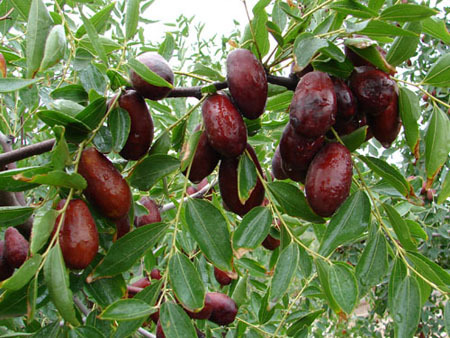
Long date produced in Lingwu is big and oval-shaped. Average weight for each date is 18 g and the biggest one is 40 g. The longest date is 6.8 cm. Its stem is 0.3 to 0.6 cm. The stem is deep in the date and the date looks purple red. The date has a thin skin and green and white flesh. It tastes crispy with rich juice and has a medium flavor neither too sour nor too sweet. The long date of Lingwu has a bright color and much flesh. It tastes crispy and has a medium flavor neither too sour nor too sweet. There are rich minerals and vitamins in the date, in particular its Vitamin C is over twice more than that in Chinese gooseberry. The date is also widely used in medicine for its medical effects as moistening lung, relieving cough, benefiting five major organs and diseases alleviation, including high blood pressure and arteriosclerosis. One is able to keep health and young by having the date for a long time. Niwawu
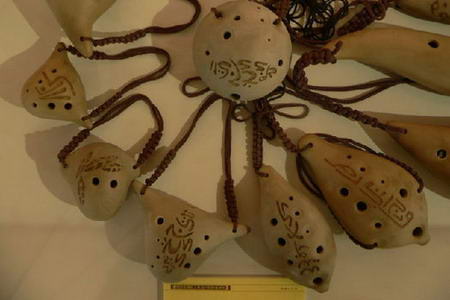
Niwawu, also known as Oxhead-shaped ocarina or mud flute, is a kind of traditional musical instrument of Ningxia Hui Autonomous Region. It is made of daub and sometimes also burned into pottery. Niwawu is the traditional musical instrument of the Hui group and a kind of ocarina. In 2005, ocarina was collected in the List of Intangible Cultural Heritage. Niwawu, as a folk musical instrument, is gradually dying down and its passing down is facing severe problems. Wickerwork of Qingtongxia
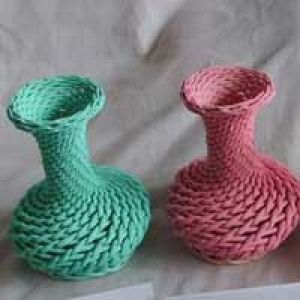
Wickerwork of Qingtongxia is a kind of handcraft with a long history. It has been favored by people both at home and abroad for its flexibility and outstanding appearance. It is also a handcraft indispensable in people’s daily lives. Wickerwork of Qingtongxia has a time-honored history. Legend tells when Emperor Qin Shihuang mandated his elder son Fu Su and General Meng Tian to station in Ningxia and open fields along the Yellow River, they built dams by straw and soil and divert the water of the Yellow River into the canal known as Qin Canal. Since then, a lot of land was irrigated. When the great project was carried out, wickerwork was widely used and the industry began to develop. Wickerwork of Qingtongxia picks slim and long wicker with even diameter and no spotless, lustrous and flexible. When put into water for initial treatment, it will be very flexible and can be used for different designs of products. After airing, those products become very durable and wear-resistant, so the wicker is indeed an ideal raw material for wickerwork. |
|
| Author: Source: xinhua Editor: Yang Fan |
|