中文简体


| Artistic deluge | |||||
http://english.dbw.cn
2011-07-14 14:28:05
|
|||||
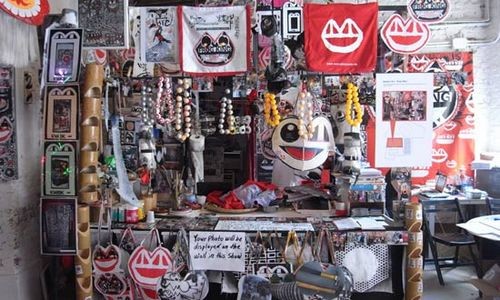
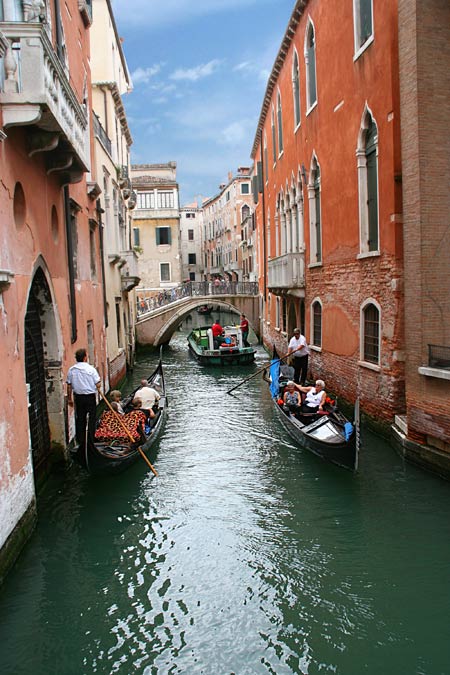
Venice is one of the most romantic and picturesque cities in the world, bar none. It has a rich history as a powerful city-state that's beauty and opulence have been preserved for us to enjoy today. Few places in Europe, or anywhere else for that matter, have so sensitively preserved their ancient atmosphere as Venice has. No wonder writer Erica Jong described it as "the city of mirrors, the city of mirages, at once solid and liquid, at once air and stone." But while Venice at the moment feels more akin to Beijing or Shanghai in the height of summer - hot, humid and crowded - people living in China have the luxury of autumn holidays to go, when Venice is at its most pleasant and least crowded. If you have ever seen the series of famous paintings by the 18th century painter Canaletto, Venice in late summer and early autumn can still look almost exactly as the painter captured it 300 years ago. Creative construction A must-see is the 54th Venice Biennale which runs through November 27. A record 89 countries and regions are participating, mostly in the adjacent areas of Arsenale and Giardini. Interestingly the Arsenale was a military-industrial complex of state-owned weapons armories and shipyards. Not only did it contribute to Venice's superior naval power during the height of its dominance in and after the Renaissance, but it could also be described as the first mass-production complex in Europe using standardized and interchangeable parts. The official theme of the Biennale is ILLUMinations, expressing the idea in Western aesthetics that beauty is often defined by light. The Chinese Pavilion is one of the most critically acclaimed. Curator Peng Feng has put together an innovative show under the theme Pervasion, the spreading of something - an idea, a scent - throughout a specified area. Because the Chinese counterpart to ILLUMinations can be understood as the pervasion of flavor and scents, the curator has chosen five Chinese artists who use the flavor or aroma of tea, incense, Chinese herbal medicine, baijiu (Chinese spirits) and lotus flowers as the subject of their work. If nothing else, the Chinese Pavilion, with its ample supply of artist Yuan Gong's man-made clouds, is a cooling treat for the senses. The Taiwanese exhibition at the centrally-located Palazzo delle Prigioni couldn't be more different. Entitled The Heard and the Unheard, this exhibit is all about a difference sense: sound. When visitors enter the palace, they find themselves in the Sound Library/Bar, which contains a database of documentary materials and audiovisual archives. To construct this, architect Kuo-Chang Liu used recycled furnishings commonly found in old Taiwanese hotels and karaoke bars. One of the strangest and most interesting collateral exhibitions is from Hong Kong and reminded me of the Western counter-culture of the 1960s and 1970s. Well-located near the entrance to the Arsenale is Frog King Kwok. Frogtopia. Hongkornucopia. Here the multimedia performance artist, Kwok Mang-Ho, has chosen the frog as his symbol and alter-ego, making the space into his home and filling it with symbols and mementoes of his life. If anyone wants to take a drug-free trip back in time, Frogtopia is the place to do it, with Kwok the cheerful guru of it all. The Korean Pavilion at Giardini is as innovative as it is noisy. Under the theme of The Love is Gone But the Scar Will Heal, it features 14 works in multiple media by the young artist Lee Yongbaek. The theme refers to the pain of Korea's modern history and its hope for the future. I especially enjoyed Broken Mirror, composed of a mirror, flat screen and computer. Exploring the boundaries between real and virtual space, the mirror appears to break with an ear-splitting sound. Teleco-Soup at the Japanese Pavilion by the artist Tabaimo creates an engaging multimedia environment that incorporates the unique characteristics of the Japan Pavilion in the Giardini. Teleco-Soup, a term coined by the artist, connotes the inversion of relationships between water and sky. It destabilizes the relationship between up and down by projecting animated sequences into an underground well, making it appear as if the sky is below and the viewer and his world has been turned upside-down. The installation suggests the incompatibility between Japan's cultural traditions and its global business presence. Euro treasure Of the Asian realm, I especially enjoyed the exhibition Speech Matters at the Danish Pavilion. The works of well-known Chinese artist Zhang Dali are my personal favorites here. They explore the role of the media in influencing perceptions and memories. I also liked the inaugural exhibition of the Saudi Arabian Pavilion with the work of sisters Raja and Shadia Alem. The Black Arch is a multimedia work suggestive of the sacred Kaaba stone at Mecca which, according to tradition, dates back to Adam and Eve. It is inspired by Marco Polo's journey and that of 13th century traveler ibn Battuta, and its much needed theme is how travel can help bridge cultures. Another personal favorite is the work of Ukrainian artist Oksana Mas, who utilized 3,640,000 of her country's traditional wooden Easter eggs, hand-painted by people from 42 different countries. When seen from up-close, every egg has its own unique design but as the viewer steps back, they come together to form a large-scale representation of the famous Ghent Altarpiece, by the Van Eyck brothers from Belgium. Fittingly, this monumental work is on display in the Church of San Fantin. City of romance Visiting these, and the numerous other exhibits associated with the world-famous art exhibition, could easily take the better of one to two weeks, to the exclusion of the many other attractions in this unique city, but aside from the Biennale, there's certainly not a dearth of things to see and do in Venice. Of course, everyone wants to visit San Marco Square, home of some of the world's best-fed and most pampered pigeons. The ornate Basilica of St. Mark is there, within a stone's throw of the Doges Palace and the Bridge of Sighs. For those who can afford, it seems every Italian and international luxury brand is within walking distance of this area. Venice may be best known as a city of canals and for its most romantic mode of transport: the gondola piloted by a singing gondolier. Rates are steep and can easily set you back 100 euros ($145.47) for 40 minutes (singing charge extra). It is imperative that you agree on the price before you get in the boat! A better way may be to take the water buses run by the city, called vaporetti. These are relatively expensive too (6.50 euros for a single trip) but not when you compare them to gondolas or water taxis. Various discounts are available for short-term travel cards. Finding a place to stay can sometimes be frustrating. Rooms during the opening of the Biennale were only available far away from the city and those who booked early still paid an emperor's ransom for the privilege. I recommend staying on the serene beach island of Lido, only two vaporetto stops from Giardini. Lido is also the venue of the 68th Venice Film Festival, which runs from August 31 to September 10. Author Truman Capote once said that "Venice is like eating an entire box of chocolate liqueurs in one go." He's right. It's the ultimate intoxicating, fashionable and romantic venue. |
|||||
| Author: Source: Global Times Editor: Wu Qiong |
|||||