 中文简体


| Taoranting Park: A public paradise | |
http://english.dbw.cn
2011-05-25 13:54:02
|
|
|
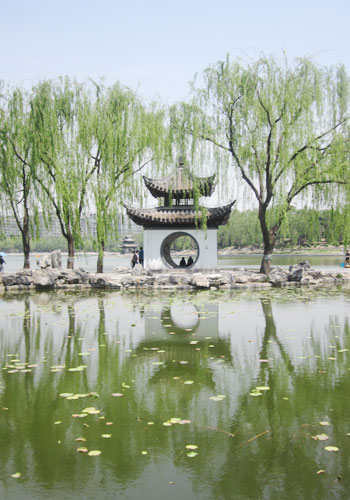
Taoranting Park is home to numerous pavilions that mimic styles from all over China. [Photo:CRIENGLISH.com] Situated in the southeastern corner of Beijing's historic Xuanwu District (now administratively merged with Xicheng District), Taoranting Park has been a public green space from as early as the third century BC. While the park occupied the suburbs of the Jin Dynasty capital of Dadu (1115-1234), it played a more central role in public life during later dynasties. During the Qing Dynasty, the park was the only one in Beijing that was open to the public; the others were reserved for royalty. In addition, the park's namesake, Taoran Pavilion, sits on a small hill, offering a view over the rooftops of the city -- an excellent panorama considering that buildings were not allowed to be taller than those of the palace. Taoran Pavilion, meaning "joyous pavilion," is one of China's four famous historical pavilions and a historically favorite spot of poets and scholars. Originally built in 1695, it was reconstructed after the founding of the People's Republic of China. Jiang Zao, a secretary in the Ministry of Works, built the pavilion along with a kiln near the adjoining Temple of Mercy. The original inscription in Jiang's calligraphy still hangs inside the temple. The inscription "Taoran" ("Joy") comes from a work by famous Tang dynasty poet Bai Juyi which inspired the name of the park: When the chrysanthemums turn yellow and wine is made, Lo! my dear friend, Let's drink to our hearts' content and be drunken away In joy. |
|
| Author: Source: CRI Editor: Wu Qiong |
|


