中文简体


| Shanghai, a duet of capital and revolution | |||
http://english.dbw.cn
2011-05-16 10:18:28
|
|||
|
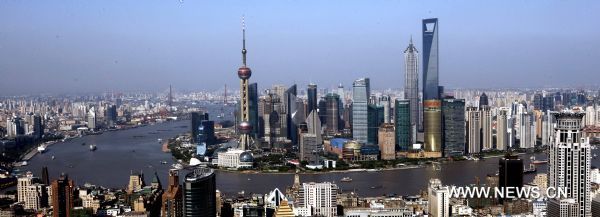
Modern-day skyscrapers, streaming vehicles, busy Shanghai Stock Exchange, grand Nanpu and Yangpu highway bridges...compose a landscape of an international metropolis. This is Shanghai, China's largest economic center and one of world's vital financial bases, a large and dynamic showcase of modern and prosperity. Established as a town in the 13th century, Shanghai was once the largest economic center in the Far East. Since the founding of New China in 1949 and, in particular, the start of reform and opening-up in 1978, Shanghai's economy and society have undergone great changes and the city has become one of the international economic, financial, trade and shipping centers of the world. Thanks to rich history and open policy it enjoys, Shanghai is a melting pot with all-embracing tolerance of cultures and a fascinating metropolis blending dynamic fashion and graceful nostalgia. It is where old people can cherish their memory of the past and young people can find fashion to follow, foreigners feel very Chinese and Chinese feel very foreign, which is indeed the true essence of Shanghai culture. People can experience the elegance of old Shanghai by roaming along the Bund or indulging in the old dancing saloon Paramount Hall, feel the dynamic fashion by shopping in the Nanjing Road, as well as enjoy the romantic mood in mixed style of Shanghai and the west by seating in the Xintiandi. As a melting pot, it also has been performing another kind of duet. Ninety years ago, Chinese Communist Party (CPC) was born in a two-storey building in contemporary Frenchtown in the city, where the First National Congress of CPC was held. In the following decades, the city has witnessed two styles of tremendous changes in Chinese history, liberation by CPC troops, foundation of PRC, and the Cultural Revolution on one side, while Reform and Opening-up, economic and financial development on the other hand. Xingyelu, the site of the First National Congress of CPC, now is surrounded by international galleries, bars and cafes, boutiques or theme restaurants. However, Shikumen, or stone gate, the architecture style of the site, is retained here for decades. The buildings nearby, with antique walls, tiles and exterior of Shikumen, are endowed fashion and new commercial value interiorly. Pudong, used to be a rural area of Shanghai where soldiers fought battles, is regarded as a vanguard of China's economic and financial development nowadays. China Executive Leadership Academy Pudong, one of the three high-profile CPC cadre training institutes, locates here. The Pudong-based institute runs courses on international affairs, and helps trainees keep pace with the times and be more open. After CPC had been founded on July 23, 1921, it led an organized strike immediately in Shanghai. Chinese workers of British and American Tobacco's factories in Shanghai struck in July and August, asking for firing a foreign supervisor who deducted their wages. It was the first strike that CPC led since its birth, followed by three times armed Shanghai worker's uprisings. BAT's Chinese workers deeply involved the revolution led by CPC against the capitalist and their regime. In spite of the reluctant retreat from China's market since the founding of PRC in 1949, BAT returned to the country for the alluring market and profit after China announced the reform and opening-up to the foreign investors and traders once again. Nowadays BAT has a branch office which operates business in Shanghai, and its former branch office site with nearly 100-year history in Zibo City, east China's Shandong Province, has been reserved as a memory. Cultural Revolution (1966-1976), a frenetic and chaotic mass campaign, remained as a deep memory for Shanghai seniors. Many Shanghai youngsters in that era became enthusiastic Red Guards, Chairman Mao's loyal soldiers. Dai Fumin, born in 1949, was one of them. With the grand adoration to Mao, he went to Beijing by train with classmates in 1966 and was excited as met by Mao. Near half a century passed, Dai became an old man. Nowadays he leads a totally different life from that time. His daughter named Dai Yiyun, who was born in 1980, quited her former job as a designer working in a company from 9:00 to 17:00 every day and now serves as a tourism consultor in a private travel agency. "I hate to be restrained and prefer the current job which provides me more freedom. I'm the master of my own life." She said. As for Dai Fumin, he goes to a stock exchange office near his house everyday after retired. As a senior trader, this is his "job" at present. "These are two different eras in Shanghai. Both of them have impressed my life deeply." Dai said. Despite enjoying their modern life in Shanghai, which is believed as the most western-style city in China, some people also get on well with the "red life". There are more than ten thousand CPC members who work in foreign-invested companies all over Shanghai laying their CPC member files in Expo Group-Shanghai Foreign Service Co,.Ltd. With high salary and dealing with foreigners every day, they are enthusiastic about taking part in different promoting activities held by their CPC branches in their spare time, such as forums and visits to monuments of CPC revolutionary martyrs. This is Shanghai, a dynamically fashionable economic center with the "Red" character flowing in its blood, drawn into the whirlpool of capital and revolution for nearly one century. It also looks like a diamond with many sides in which you can see different colors. |
|||
| Author: Source: xinhua Editor: Yang Fan |
|||