 中文简体


| Earthquake reconstruction legacy moves China forward | |
http://english.dbw.cn
2011-05-13 15:05:45
|
|
|
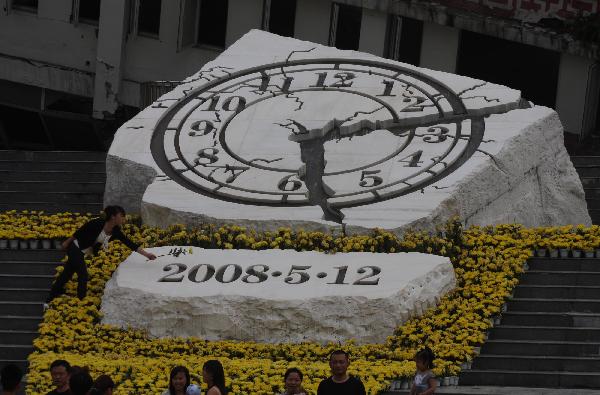 China prepared itself for the worst when psychologists predicted a wave of suicides in the wake of the 2008 Sichuan earthquake, which left more than 85,000 people dead or missing and millions without homes.
However, China not only avoided a rash of suicides, but also managed to create new lives and futures for those affected by the quake. He Xiantong, a resident of Sichuan's Qingchuan County, lost 12 relatives during the May 12 earthquake. He says he thought of committing suicide not long after the disaster. "My relatives were all buried under the rubble. I told myself that suicide was one option I could take. I was in too much pain to live," he says. What rekindled his hope to live on was a talk with local government officials. When he heard that a new park would be built in his hometown, he asked the county government for permission to open a new store in the park, a place where he could sell sacrificial offerings for visitors who wished to mourn relatives who were killed in the quake. "They agreed to my proposal. While running my business, I have had chances to meet many people, and their love and kindness are infectious," he says. Chinese Premier Wen Jiabao declared on Tuesday that a "decisive victory" had been achieved in the reconstruction efforts, with 95 percent of reconstruction projects in the provinces of Sichuan, Shaanxi and Gansu having been completed. China's overall reconstruction plan called for the region to be completely rebuilt within three years. The government's main goal in executing the plan was to ensure security and stability for quake-affected residents by providing them with new employment and housing opportunities. Upgrading infrastructure, preserving the region's environment and bolstering local economies were also part of the ambitious plan. |
|
| Author: Cheng Yunjie and Wang Ruoyao Source: xinhua Editor: Wu Qiong |
|


