 中文简体


| Experiencing cultural and historical sites in Shanxi | |
http://english.dbw.cn
2011-04-25 14:12:40
|
|
|
Northwest China's Shanxi Province claims possession of rich cultural and historical heritage, having more than 70% of all ancient architecture in China built before the Liao and Song Dynasties. A series of photos depicting famous scenic spots such as Yungang Grottoes, the Ancient City of Pingyao and the Suspended Temple (Xuankong Si).
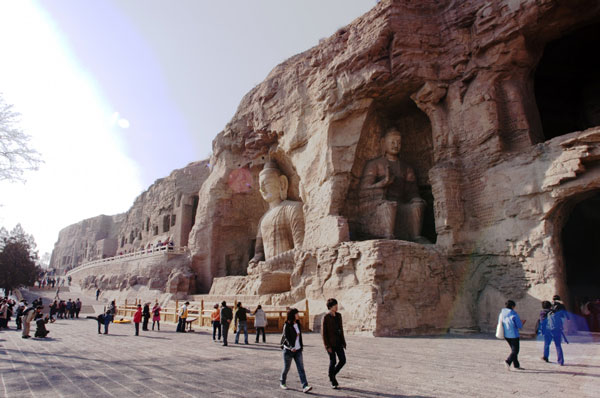
The Yungang Grottoes, with a history of more than 1,500 years, is one of the largest cave clusters in China. Located in the north cliff of Wuzhou Mountain, Datong, the grottoes, composed of 53 caves and over 51,000 stone statues, represent the Chinese Buddhist cave art from the period of 460-525 AD. It also encompasses Indian Buddhist art, Greek and Roman architectural characteristics, indicating ancient China's cultural exchange and relationship with diverse world civilizations.[Photo by Yin Pengxuan]
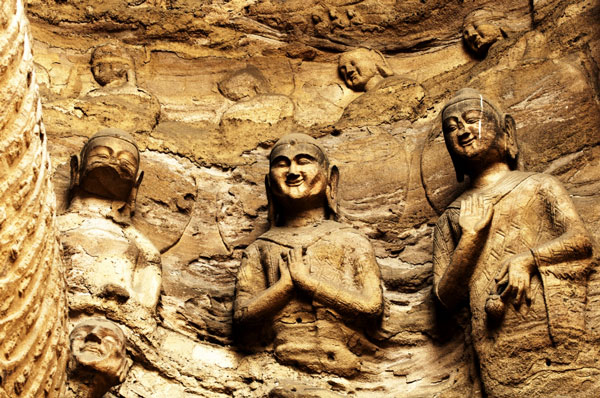
The Yungang Grottoes, with a history of more than 1,500 years, is one of the largest cave clusters in China. Located in the north cliff of Wuzhou Mountain, Datong, the grottoes, composed of 53 caves and over 51,000 stone statues, represent the Chinese Buddhist cave art from the period of 460-525 AD. It also encompasses Indian Buddhist art, Greek and Roman architectural characteristics, indicating ancient China's cultural exchange and relationship with diverse world civilizations.[Photo by Yin Pengxuan]
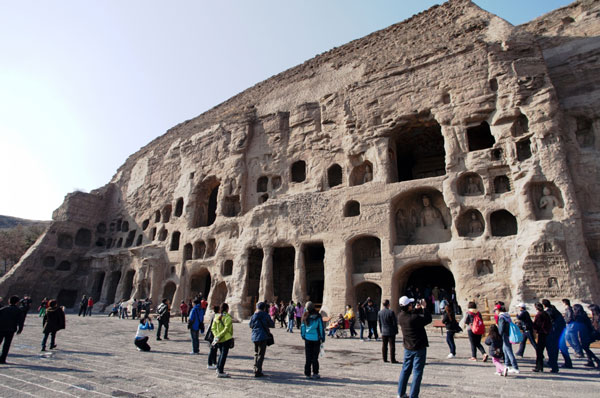
The Yungang Grottoes, with a history of more than 1,500 years, is one of the largest cave clusters in China. Located in the north cliff of Wuzhou Mountain, Datong, the grottoes, composed of 53 caves and over 51,000 stone statues, represent the Chinese Buddhist cave art from the period of 460-525 AD. It also encompasses Indian Buddhist art, Greek and Roman architectural characteristics, indicating ancient China's cultural exchange and relationship with diverse world civilizations.[Photo by Yin Pengxuan] |
|
| Author: Source: CRI Editor: Wu Qiong |
|


