 中文简体


| Escape to the tropics: Dai restaurant in Beijing | |
http://english.dbw.cn
2011-04-02 11:12:26
|
|
|
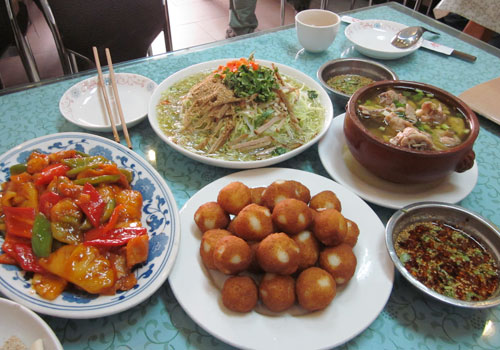
A Dai Feast: Sweet and Sour Pineapple Chicken; Ban San Si (sliced chicken, cabbage, noodles, and potato powder); Fried Potato Balls, and Steamed Pot Chicken. [Photo:CRIENGLISH.com] Baoqin Daiwei Restaurant is one of many ethnic selections near Minzu University, but the cuisine, native to the Dai minority of Yunnan province, stands out for its light, tropical, but dynamic flavors. The restaurant was opened on July 1st 1997. "It was the same day that Hong Kong was returned to China, so we thought it would be a lucky day," explained owner Ma Shoubing. "We opened our doors at exactly twelve noon that day." The former Minzu University philosophy professor, who also taught Chinese language to foreign students, is a native of western Yunnan and part of the Dai ethnic group. While many of the common ingredients, such as the meat, are bought locally, the ingredients that create the distinctive flavor of Dai food are sourced from Yunnan. Many of the special ingredients cannot be bought locally, including sour bamboo. The rice wine is made in-house from alcohol and fermented sticky rice, though the alcohol content is weak compared to other Beijing liquor. Lemon flavorings and sour cabbage are also popular in Dai cuisine, along with cuisine cooked with pineapple or papaya. The pineapple sticky rice, actually served in a pineapple, is a special treat, as is the sweet and sour pineapple chicken. The lemongrass-flavored roasted fish rivals any from a tropical island. Dai cuisine is also famous for being spicy; the Shuan Shuan La pepper is an important ingredient with an interesting story behind its name. Shuan means "to rinse" in Chinese. "A family would stir the soup broth with the pepper, and that would make the soup very spicy," said Ma Shoubing. "They could give it to another family, and they would do the same. One pepper could make spicy soup for a whole village." |
|
| Author: Angela Pruszenski Source: CRI Editor: Wu Qiong |
|


