中文简体


| Ming Dynasty watchtower still going strong | |||
http://english.dbw.cn
2011-02-15 10:37:40
|
|||
|
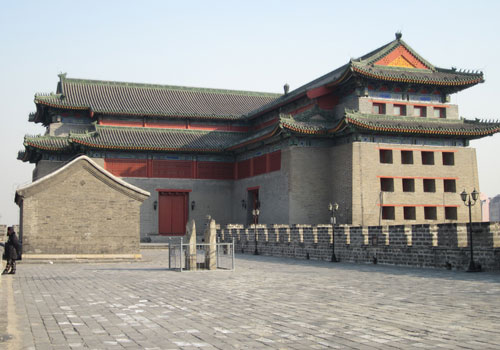
A photogenic gem surrounded by train tracks and traffic, Beijing's southeast watchtower has managed to withstand time, battles and modern reconstruction to remain intact to this day. Built during the Ming Dynasty as a military stronghold along the city wall, the tower features 144 archery windows. Of the four watchtowers (including the southeast, southwest, northwest and northeast towers), the southeast watchtower is the only one still intact today. The others were dismantled during the 20th century, mostly due to disrepair and to make way for other projects. When the Eight-Nation Alliance attacked Beijing on August 13-15, 1900, the watchtower was the site of an important battle because of its proximity to the foreign legation quarter where embassy officials, foreign businessmen, missionaries and Chinese Christians had taken refuge. When foreign troops took over the tower, they left graffiti etched in some of the outer stones. Some names and dates written in English and Cyrillic can still be seen on one outer wall of the watchtower. In 1915, a railway arch was made in the Ming Dynasty city wall to make way for the Round the Capital Railway which opened the following year. The archway now serves at the entrance to the watchtower area, and the modern railway to Beijing station runs just north of the tower. Trainspotters can enjoy views of incoming trains from on the wall. The interior of the watchtower has actually been converted to an art museum, the Red Gate Gallery. The gallery, founded and directed by Australian native Brian Wallace, occupies the first and top floors of the watchtower and showcases modern art in a variety of media by foreign and Chinese artists. Founded in 1991, the gallery is one of the longest-running outlets for modern art in China. On the second floor of the watchtower, the exhibition returns to the tower's history. Ancient maps of Beijing are on display as well as an impressive array of photos from the late 1800s onward, showing the everyday traffic through the city's nine gates, from merchants with wagons to camel caravans. Each gate has a dedicated display explaining its history. The tower is located in a small park frequented by elderly Beijing residents who come to sit on benches or exercise on the sidewalk. Stone plaques around the area offer tidbits about the wall's history in both Chinese and English. Photography lovers would particularly enjoy this spot as the tower, wall and surrounding park are extremely photogenic. The tower has been well-kept, but the wall shows signs of age, adding character to its appearance. The tower and the surrounding park are not crowded, making it a favorable stop for low-impact but interesting sightseeing and photography. A small tourist center and souvenir shop are also on the premises. The logistics: Transportation: Walk about 10 minutes south of Jianguomen Bridge or about 15 minutes east of Chongwenmen. Hours: 9 a.m.-5 p.m. Admission: 10 yuan. The Red Gate Gallery is free to the public, so if you mention that you're visiting the gallery, the admission fee will be waived. |
|||
| Author: Source: CRI Editor: Wu Qiong |
|||