中文简体


| Lhasa | |
http://english.dbw.cn
2011-01-05 12:14:04
|
|
|
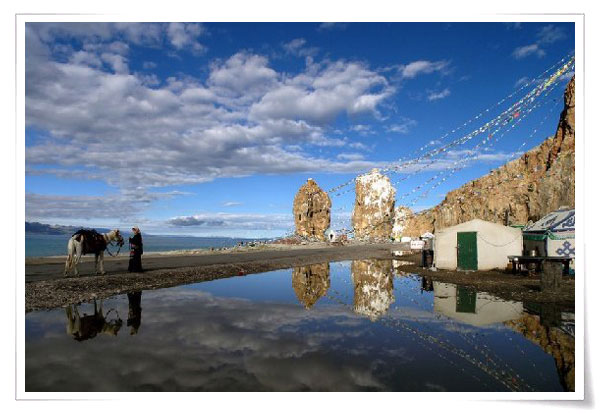
Lhasa is the capital city of Tibet Autonomous Region and has long been the center of politics, economy, culture and religion in Tibet. Lhasa means "holy land" in Tibetan language. The history of the city dates back to the 7th century AD, when the Tibetan King Songtsen Gampo conquered many tribes, united Tibet, transferred the capital from Yarlung to Lhasa, and established Tubo Regime. The 11th century had seen the Buddhism spreading widely and Lhasa became the center for many eminent and learned monks to preach the religion. In the time of the 7th Dalai Lama, a very famous palace, Norbulingkha, 2 kilometers away from the Potala Palace, was built. From then on, the ancient section of Lhasa city was formed, with Potala Palace as its center, Barkhor Street and Norbulingkha Palace on both sides. Lhasa is one of the most charming cities in China. The grand Potala, the blue sky, the clear water and the fresh air all add charm to the city. The total population of the city is around 373,000 and the total population in the urban area only is close to 130,000. People of 31 nationalities live in the city and Tibetans take up 87% of the total population. Lhasa is located in the valley of Lhasa River, a branch of Yarlung Tsangpo River. It is 3,658 high in altitude. The city has jurisdiction over 7 counties and one district with an area of 300,000 square kilometers. The total area of urban section is 523 square kilometers. Major Tourist Sights: *Potala Palace *Jokhang Temple *Barkhor Street *Ganden Monastery *Curpu Monastery *Sera Monastery *Tibet History Museum *Razheng Monastery *Drepung Monastery *Yangpachen *Klukang Monastery *Namtso Lake *Norbulingka |
|
| Author: Source: CRI Editor: Wu Qiong |
|