中文简体


| Walk like an Egyptian | |||
http://english.dbw.cn
2011-01-04 15:54:49
|
|||
|
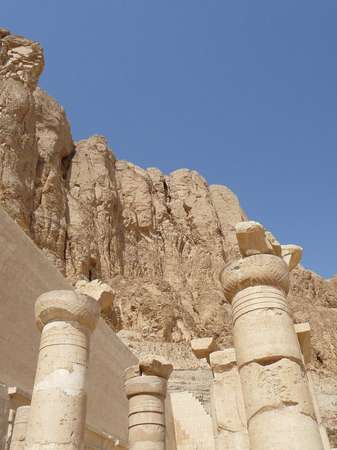
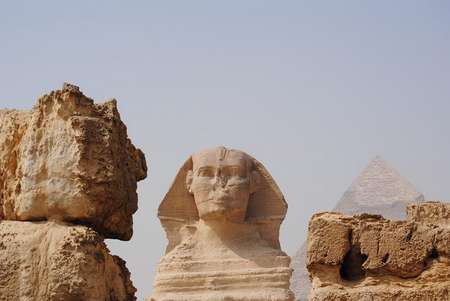
In my mind, the word "Egypt" has always been associated with the Great Pyramids towering in the boundless desert, the Sphinx gazing at continuous visitors and the rippling River Nile. But when I arrived in Cairo, I was shocked to find the buildings remain largely roofless and scattered around, and cars are seemingly everywhere. My fantasy of movie-Egypt was destroyed by bothersome reality, until I left busy, urban Cairo for Luxor. In Luxor I found the true Egypt, or at least what I wanted to be the "true Egypt." Located 415 miles south of Cairo, Luxor stands on the site of the ancient city of Thebes. It's naturally divided in two by the Nile, with the Valley of Kings, Valley of Queens and Hatshepsut Temple on the west bank and Karnak and Luxor Temple on the east. Traveling to Luxor Luxor has a wonderful climate. There is sunshine all year, hot summers and warm winters with cool nights. Going from Cairo to Luxor takes a full day by train. A sleeper car costs 330 Egyptian pounds, or $60, and a first-class seat is 165 Egyptian pounds, or $30. If you take a regular seat, your train ticket is hand-written with a speculative departure time and largely theoretical seat number. On a tight schedule, we opted to take a sleeper car and got a boring, machine-printed ticket. The train is an attraction in its own right, as you can watch the river, palm trees and small houses go by. The local economy relies on tourism, so it's not difficult to find a guide to show you around. The moment we disembarked from the train, a guide named Moosa ran up and sold us a one-day travel package for 50 Egyptian pounds per person, not including entrance tickets. Sites to see The most impressive site is probably the Karnak Temple, which was the main place of worship during the 18th Dynasty. It is believed to be the second most visited historical site in Egypt, second only to the Great Pyramids near Cairo. Although destroyed, the temple complex remains unparalleled in size and complexity, overwhelming anyone who dares to look upon it. Local flavor Our impromptu guide, Moosa, took us to a random restaurant for lunch. "It is really a five-star buffet," he said. "And you can have lunch either in the open air or on a cruising boat." We don't know where he found the place, but the food left a lot to be desired. Later, though, we lucked upon a restaurant named Sofra on the East Bank, at the far end of Mohamed Farid Street near Luxor Temple. It is set in a 1930's Egyptian house with traditional decor including antique oriental furniture, colorful copper lamps and beautiful mirrors. You can eat inside or outside, or on the roof terrace. This is really a good place to have real Egyptian food. All the food was well prepared and well presented, and the menu was written in Arabic and English. The portions were generous, service was fine, and waiters spoke reasonable English. We had four courses and a couple of juices and mineral water, for a total of just 240 Egyptian pounds (less than $45). You can never miss the fresh juice in Egypt. If you look around you should be able to get virtually any in-season fruit: sugar cane, mango, strawberry, pomegranate, orange, lemon, etc. |
|||
| Author: Source: Global Times Editor: Wu Qiong |
|||