涓枃绠€浣?/a>銆€|銆€



| The a-word | |||
http://english.dbw.cn銆€銆€
2010-12-21 13:47:43
|
|||
|
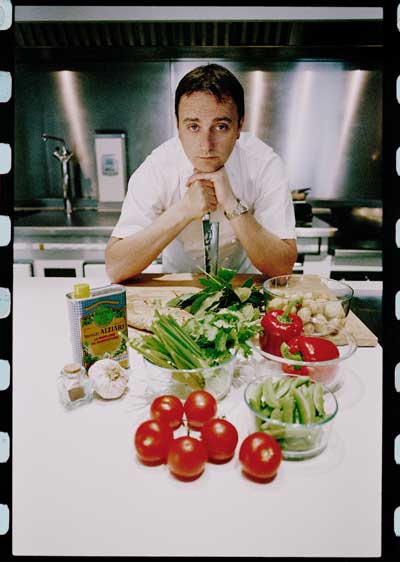
Having left the Gordon Ramsay group in April, Michelin-starred chef Jason Atherton opened his first independent restaurant venture known as Table 1 at the innovative Waterhouse hotel in Shanghai in May. Atherton, who has labored with the knife in kitchens alongside world-renowned chefs as diverse as Marco Pierre White, Ferran Adri脿 Acosta and Heston Blumenthal is now a celebrity chef in his own right. Recently in town to supervise the release of his new winter menu, the Global Times caught up with Atherton between courses to discuss his locally produced food. What were the challenges setting up here? Every city has its own challenges, and of course Shanghai is no exception. I'm afraid it doesn't matter where you are in the world, you will always find problems with staff and suppliers. I don't like to sit around complaining though; what would be the point? Anyone who takes that attitude needs to get off their backside and do something about it. What locally sourced ingredients are you using? One of the best things about Shanghai compared, say, to Dubai, is that it has seasonal fruits and vegetables. We are going to take a local vegetable like the radish and try it in 10 different styles, find the best five and use them. My philosophy has always been to embrace local culture and study the way people eat. But while all the food is being sourced locally, the cooking style at Table 1 isn't Asian in influence. However, we do have a "sharing dishes" concept that's quite Chinese, and is also a bit like tapas culture. But I certainly don't want to introduce an East-meets- West concept as I feel it's been overdone. I would, however, one day like to open an Asian street food caf茅 that blends the idea of a dumpling shop with an English "greasy spoon" caf茅. Are there further gaps in the Shanghai restaurant market? Shanghai is a great market and I think in the next year or so you'll see more and more top-quality chefs coming here. So far, what people have failed to recognize is that Shanghai doesn't need more high-end restaurants. All these guys that open up really expensive eateries here are wondering why they aren't doing so well. Well, a city's culture dictates how much people spend in restaurants. In Paris, for example, people really care about good food and will save up to eat in a good restaurant twice a month. In somewhere like London, people would rather eat out twice a week so they won't go super high-end. What's important in Shanghai is not pricing out customers. It's also important to stop pretending there is a never-ending supply of rich people that you can cater to. Reasonably priced, quality food at not much more than $50 (330 yuan) a head is what people want. |
|||
| Author锛? George Wyndham 銆€銆€銆€Source锛? Global Times 銆€銆€銆€ Editor锛? Wu Qiong | |||