涓枃绠€浣?/a>銆€|銆€



| Getting round | |
http://english.dbw.cn銆€銆€
2010-12-09 09:58:11
|
|
|
Breaking the beauty of all that is 8 am, a machine-gun sound of firecrackers rattled my peaceful surrounds at a volume that would wake the dead. Or at least, loud enough to wake the only foreigner sleeping in the tulou. I guessed it was time to get up.
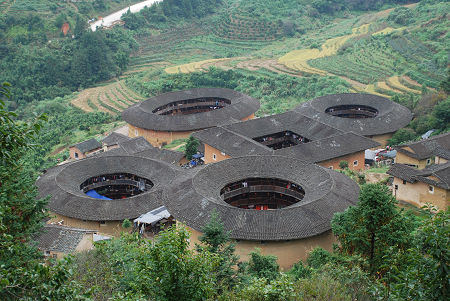
I had just spent my first night in a Fujian tulou and I rolled out of bed and sleepily scuffed to the balcony to find out which young punk decided that firecrackers in the morning would be a funny way to interrupt my rural bliss. When I reached the railing and looked down into the circular, cobblestoned courtyard three floors below, there were no young punks - just an old lady laying out another string of fireworks. She lit the fuse and while it fizzed away, she walked to the shrine at the far end of the courtyard, put her hands together and prayed briefly, paying respect to the ancestors. The firecrackers started up again, the ancestors were appeased and another day had begun in the tulou. Circular life When I first read about tulou (literally, earthen buildings) I was surprised that I hadn't heard of them before. Giant structures that rise from the picturesque Fujian countryside, the "roundhouses of Fujian" are more like circular fortresses than houses. Between three and five stories high and up to 70 meters in diameter, their pale, earthen color and slightly cracked veneer give a timeless and organic look. Tulou in Fujian were built by the Hakka ethnic group from the 12th century until the 1960s. After migrating from northern China, the Hakka settled in a number of areas, but Yongding county in southwest Fujian is where they really left their mark. Facing constant threats from marauding bandits and wild animals, the Hakka decided to build fort-like structures large enough to house entire villages. The result is a collection of structures that not only protected the Hakka from the outside, but today provide a wonderful glimpse into their old ways. Tulou have thick, earthen walls made from a mixture of rammed earth, glutinous rice and bamboo strips. Each level has between 20 and 70 rooms facing inward to the circular courtyard, usually with an ancestral hall in the middle. Today more than 20,000 tulou still survive and in 2008, 46 were World Heritage listed by UNESCO. Many are well set up for tourism, but in the vast majority, life continues as normal. As I discovered, the best way to experience the magic of this unheralded piece of Chinese history is to get out there and spend a few days living in a tulou. |
|
| Author锛? David Sparkes 銆€銆€銆€Source锛? Global Times 銆€銆€銆€ Editor锛? Wu Qiong | |