涓枃绠€浣?/a>銆€|銆€



| Hong Kong declares four buildings gov't-protected legal relics | |||
http://english.dbw.cn銆€銆€
2010-12-08 11:07:35
|
|||
|
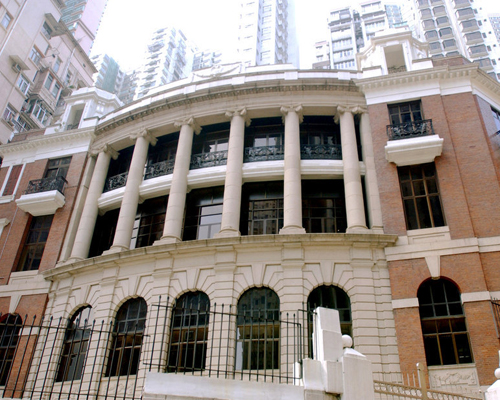
The Hong Kong Special Administrative Region has declared four historical buildings, including the Tung Wah Group of Hospitals, Man Mo Temple, Loi Shing Tong Ancestral Hall and Kom Tong Hall, as government-protected relics. Built in 1911, the Tung Wah Group of Hospitals originally served as medical institutions in Kowloon. They were rebuilt as a museum in 1970 to preserve their artifacts and historical documents. The museum was built in Chinese renaissance style, which is a combination of traditional Chinese and western architectural elements. Man Mo Temple, built in the 1850s on Hollywood Road, is a temple for the worship of the civil or literature god Man Tai and the martial arts god Mo Tai. The two gods were popularly patronized by scholars and students seeking success in their studies or high scores on the civil service examinations during the Ming and Qing dynasties. The temple is a reflection of the organization and religious practices of Chinese society in Hong Kong. Located in Kam Tin, Yuen Long, the Loi Shing Tong Ancestral Hall was built in memory of Tang Kwong U. The architectural style is typical of Qing Dynasty building with patterns and decorations for good wishes on gray walls and curved eaves and ridges. Kom Tong Hall, built in 1914 on Castle Road, was the private home of a merchant named He Gantang. The classical building constructed in Edwardian style was bought by the government in 2004 and turned into the Memorial Hall of Dr. Sun Yat-sen. These four historical relics are open to the public. The venues plan to provide free maps and guides for visitors. |
|||
| Author锛? 銆€銆€銆€Source锛? CRI 銆€銆€銆€ Editor锛? Wu Qiong | |||