涓枃绠€浣?/a>銆€|銆€


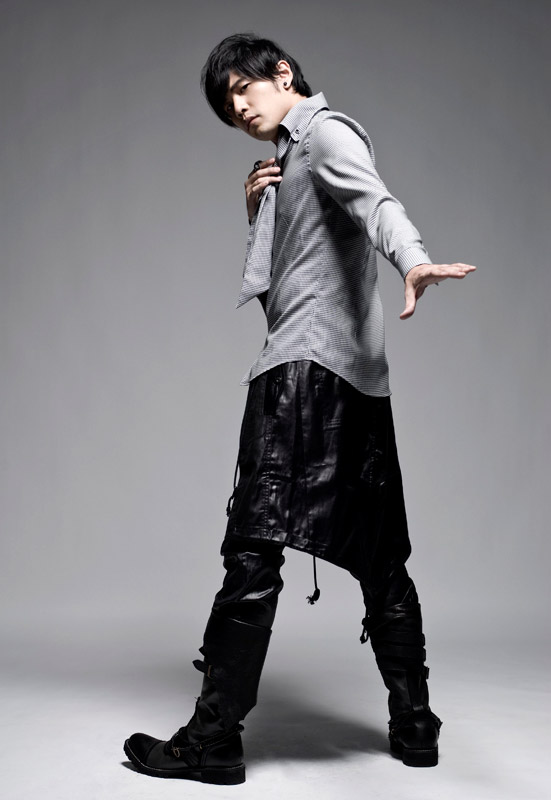
| Jay Chou's times goes ahead | ||
http://english.dbw.cn銆€銆€
2010-07-02 10:29:25
|
||
|
Unlike some rock stars, he has never had a run-in with the authorities. He is the rare cool boy who is clean and good. No wonder teenagers are rarely discouraged from jumping on the Chou bandwagon. A significant number of his songs are love ballads with the theme of abandonment. While conventional musically, these songs, on which he is the sole lyricist, sing of someone deserting him. On the surface, they are about the breakup of adolescent romances. But why doesn't he focus on other facets of a love affair, such as falling in love? Was he hurt romantically in his teenage years? Or, could these songs embody more than the oh-so-blue mood of a jilted lover, but abandonment, including rejection by a school of higher learning? What stand out in the Chou canon are songs mostly penned by his long-time collaborator, Vincent Fang. Many of these numbers are mini-dramas with exotic settings - Istanbul, an Indian town in the old West, ancient Babylon, a Kyoto pub, a European castle evocative of Dracula, to name just a few. A school could build an entire course around the knowledge embedded in these situational vignettes. Fang's lyrics are rich in imagery and capture the moods of these locales. They are like National Geographic set pieces with an eye for detail. A large chunk of this work is devoted to the glory of Chinese civilization. They are collectively known as "zhongguo feng", or traditional Chinese style. They include Shanghai in 1943, Nunchucks, East Wind Breaks, Herbalist's Manual, Blue and White Porcelain and perhaps the most popular of all Chrysanthemum Terrace from Zhang Yimou's blockbuster Curse of the Golden Flower, which tailor-made a role for the singer. Using a wide spectrum of musical styles, from rock to folk, from bossa nova to country, these tracks, however, do not attempt to reproduce the original sounds of the songs associated with them, but rather strategically deploy a chord here or a few bars there as icing on the cake. As such, they cannot be compared with, say, an authentic country and western ditty or a Ming Dynasty (1368-1644) court aria. They are, in essence, the 2.0 version with Chou's uncanny ability to fuse different musical genres and make them his own. Chou is often criticized for his blurry diction. It is fair to say one cannot make out the lyrics no matter how many times one listens to these songs. Part of the reason is density of words in a single minute. Vincent Fang has a penchant for quick successions of imagery and verbal excess. His purple patches are sometimes so busy and Baroque and burdened with so many rhyming words they essentially become tongue twisters. Even Pavarotti could not have rendered them intelligible. But I suspect it is not Chou's deficiency in diction - at least not totally - that causes this problem. There are a couple of numbers where he sounds so weird that one has the feeling Chinese is not his first language. But in his love ballads the pronunciation problem evaporates. It is quite possible he magnifies his diction's imprecision as a form of vocal acting. Even given this latitude in interpretation, some of his songs have the form and the content so misaligned you would wonder what the purpose of supplying meaningful lyrics is. They are reduced to sound effects anyway. The more refined the lyrics, the more Chou is suspicious of massacring the Chinese language. But if that is the price he pays for innovation, maybe he should not be faulted for it. Jay Chou's best songs, in my opinion, are those with autobiographical traits, but not necessarily big hits. His feeble efforts to stop family violence (Dad, I'm back), his nostalgic trips back to high-school days (Rice Fields), his frustrations in acting (Besieged from all sides), his ideals in music and his life philosophy (Red Imitation), his encouragement to youngsters not to give up but to adjust their dreams (Rice Aroma), and his annoyance at being constantly scrutinized (Superman Can't Fly). "My lyrics have to be cultured because they may get into textbooks I have to watch my diet or I may not look like my wax figure in Madame Tussauds. When can I see my hand and foot prints at Mann's Chinese theater?" His aspirations are juxtaposed with his concerns of being an idol: "Don't ask me if I cried because Superman is not supposed to shed tears It is so tiresome to be asked to rescue the world. Even if Superman can fly, please let me take a break." Chou, nicknamed Superman by his friends, wants to scale more heights, possibly conquering the film world, but he is dragged down by exhaustion and, as his detractors have repeatedly pointed out, his failure to reinvent himself. For most pop singers, a decade is a decent length of time to be so popular. One cannot expect to be in one's prime indefinitely. Is this the beginning of a long descent into irrelevance or another phase of a brilliant career full of surprises? Prophecies of his professional demise have proved wrong before and as Chou himself says: "I do a lot of things not for the reasons you suspected." Who knows, maybe a break is exactly what he deserves right now? <<previous [1] [2]
|
||
| Author锛? 銆€銆€銆€Source锛? China Daily 銆€銆€銆€ Editor锛? Wu Qiong | ||