涓枃绠€浣?/a>銆€|銆€


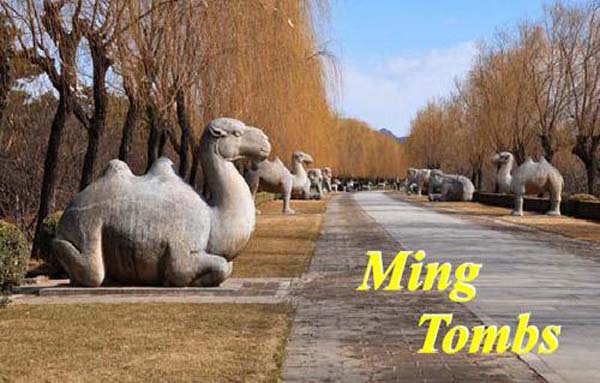
| Following the sacred way to the Ming Tombs | |||
http://english.dbw.cn銆€銆€
2010-04-07 09:42:46
|
|||
|
The tombs of the Ming Emperors are situated out near the Tianshou Mountains, some 50 kilometres northwest of Beijing. It may be a bit off the beaten track for many tourists but it is well worth making the trek out to view the necropolis of some of China's great rulers of the past 鈥?monarchs who ruled from 1368 through to 1644. Apart from the tombs of 13 Ming Dynasty emperors, the tombs of seven concubines and the tomb of a eunuch are also situated in the valley. According to UNESCO, the Ming Tombs' area was worthy of being listed as a World Heritage Site because it offers a number of unique attractions. The tombs, which took more than 200 years to construct, show the harmonious integration of remarkable architecture set in a natural environment. And, what makes this natural environment particularly fascinating is that it was selected to meet with the ancient rules of geomancy, or Fengshui, thus making the imperial tombs a masterpiece of human creative genius. According to Fengshui, bad spirits and evil winds that descended from the North had to be deflected and so an arc-shaped area at the foot of mountains north of Beijing was selected. Today, the Ming Tombs offer us dazzling insight into the beliefs, world view and geomantic theories prevalent in feudal China. The tombs offer the visitor the opportunity to not only view the burial edifices of great historical figures, but experience what was the theatre for major events during the course of China's rich and gripping history. |
|||
| Author锛? 銆€銆€銆€Source锛? china.org 銆€銆€銆€ Editor锛? Wu Qiong | |||