涓枃绠€浣?/a>銆€|銆€


| China's top political advisory body begins annual session | |||
http://english.dbw.cn銆€銆€
2010-03-04 08:51:09
|
|||
|
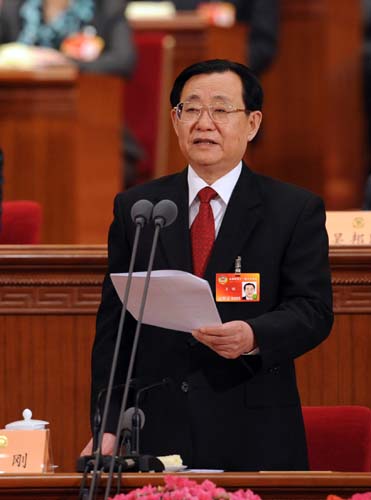
As an open forum where the ruling CPC, non-Communist parties and people without party affiliation discuss state affairs freely and on an equal footing, the CPPCC has been the manifestation of China's socialist democracy. In the work report, Jia pledged that the CPPCC would make more efforts in 2010 to boost the nation's economic development and the improvements in people's well-being, maintain social harmony and stability, promote ethnic unity and religious harmony, and strengthen emotional ties between people across the Taiwan Strait. "The CPPCC will carry out thorough investigations and studies on improving the institutions, mechanisms and policy orientation for accelerating the transformation of the pattern of economic development," Jia said. He vowed that the CPPCC would give its full attention to factors affecting social stability that have their source in the excessive income gap, and offer solutions and suggestions on adjusting the pattern of national income distribution. Meanwhile, he said that the CPPCC would continue to support economic and social development of ethnic minorities and ethnic minority areas. "The CPPCC will strive to achieve leapfrog development and lasting stability in Tibet and Tibetan ethnic areas in Sichuan, Yunnan, Gansu and Qinghai provinces," he said.
|
|||
| Author锛? 銆€銆€銆€Source锛? xinhua 銆€銆€銆€ Editor锛? Yang Fan | |||