涓枃绠€浣?/a>銆€|銆€


| Lu Xun's Real Story Gets Wrecking Ball: Badaowan Hutong | |
http://english.dbw.cn銆€銆€
2010-02-02 09:34:18
|
|
|
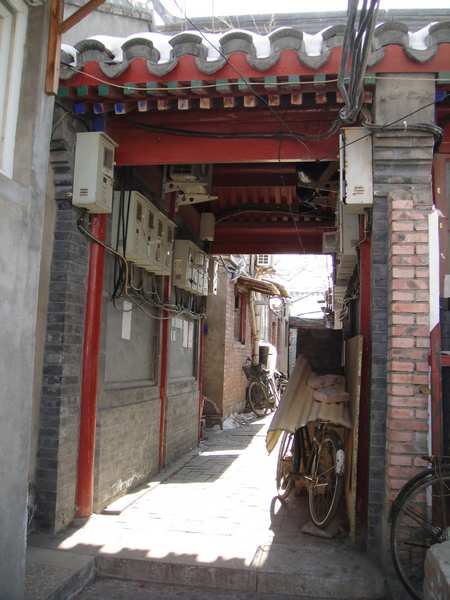
Lu Xun once lived here. It might not be Bloomsbury, but the somewhat ramshackle Badaowan was one of the capital's few literature salons from the early 20th century. On the corner of Zhao Dengyu Lu, and surrounded by half-broken hutong nearby, Badaowan is in sad danger of losing what remains of its historical and cultural identity. No. 11: the family Lu Lu Xun is one of the most famous Chinese writers of the 20th century, described by his UK publisher Penguin as "the benchmark for all contemporary Chinese writers."Born in Shaoxing in 1881, Lu Xun was the pen name of Zhou Shuren, who moved to the siheyuan at No. 11 a year after publishing his classic Diary of a Madman. Here he lived in classic three-generations-under-one roof style with his mother, brothers and brother-in-law as well as his nephew, staying in rooms in the front, where he accomplished many great pieces including The True Story of Ah Q, and Call of Arms, satirical fiction that was highly critical of various corrupt customs and feudal codes of ethics that once permeated China. During this time, Lu and his brother Zhou Zuoren also worked together to consolidate the anti-imperialist, anti-feudal 1919 May Fourth Movement. Badaowan was much visited by influential scholars such as Cai Yuanpei, Yu Dafu, and Hu Shi. "From research into women and children to sexual psychology, Eastern culture and Ancient Greece, it was the birthplace of much of the academic thought of that time,"Sun Yu, director of the Lu Xun Museum, told Lifestyle. In Sun's opinion, the hutong was one of the most important salons in Beijing: "Its historical and cultural value is no less than any other local salon in the city,"he believes. Lu and his brother fell out over Zhou's wife which ended with Lu moving; the two brothers seldom spoke again. Because of his revolutionary stance against corruption and feudalism, Lu went on to become a glorified figure under Mao and after his death in 1936, become a national icon during the Cultural Revolution (1966- 76). Only now has his work and legacy been re-assessed from the distortions of that time and an acclaimed new translation of his works was recently published by Penguin. |
|
| Author锛? 銆€銆€銆€Source锛? Global Times 銆€銆€銆€ Editor锛? Wu Qiong | |